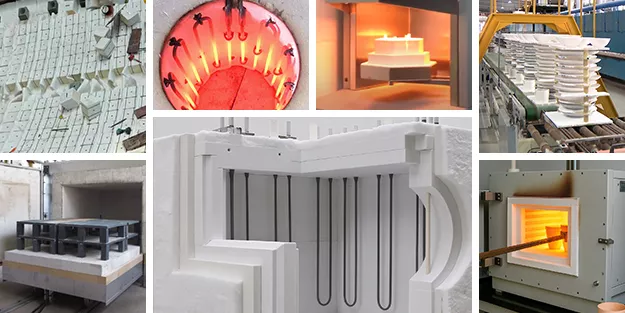

What do high-temp lab heating needs actually look like?
Lab furnaces aren’t built like big industrial production lines. The real priorities usually boil down to these:
- Wide temperature range: rock-solid performance from 1000°C to 1800°C
- Excellent temperature uniformity: ideally ±1-3°C (especially for material property testing)
- Strong atmosphere compatibility: air, inert gases (Ar, N₂), vacuum, and even mild reducing conditions
- High purity: no impurities that could mess up sample test results
- Fast heat-up and cool-down: research experiments often need quick thermal cycling
- Controllable cost and maintenance: lab budgets are tight—elements can’t be replaced every three months
Currently, silicon carbide (SiC) and molybdenum disilicide (MoSi₂) are the top heating element choices for lab furnaces due to their specific strengths. Resistance wire is also widely used for medium- and low-temperature setups. Select one based on your temperature, performance, and budget needs.
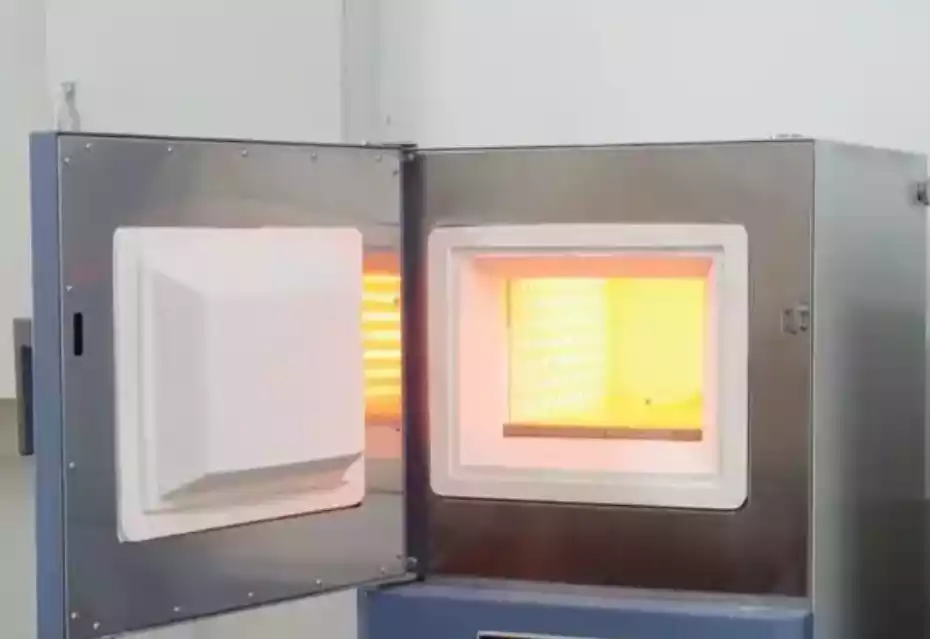
Which lab scenarios are SiC elements best suited for?
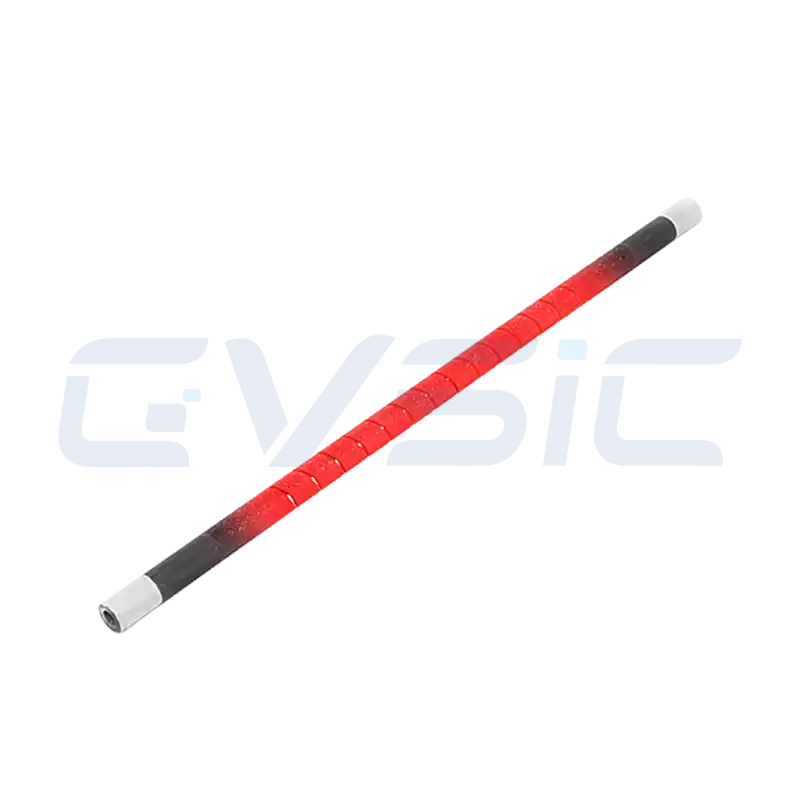
SiC elements (especially our CVSIC SG series) really shine in labs for:
- Temperature range: stable operation from 800°C to 1450°C, with short-term operation up to 1550°C to 1625°C
- Typical applications: ceramic sintering, powder metallurgy pre-sintering, glass melting, general material heat treatment, oxidation testing
- Key performance numbers:
- Recommended surface load 3-6 W/cm² (for small lab furnaces, keep it under 4 W/cm² for even longer life)
- Outstanding thermal shock resistance—from room temperature to 1300°C at up to 15°C/min without cracking
- Solid resistance stability: after 1000 hours at 1400°C, resistance usually only grows 8-12%
- High-purity versions keep impurities (Fe, Al, Na) below 50 ppm—great for experiments where sample purity matters.
I once helped a materials science lab pick a 1400°C box furnace using CVSIC φ30×800 mm U-shaped SiC elements. It ran continuously for 26 months, with temperature uniformity maintained at ±1.2°C throughout. The professor said experiment repeatability improved noticeably.
When should you go with SiC first?
- Tight budget, but need long life and thermal shock resistance.
- Mainly runs in air or weakly oxidising atmospheres.
- Furnace gets turned on and off a lot (super common in labs)
- Require great value per element.
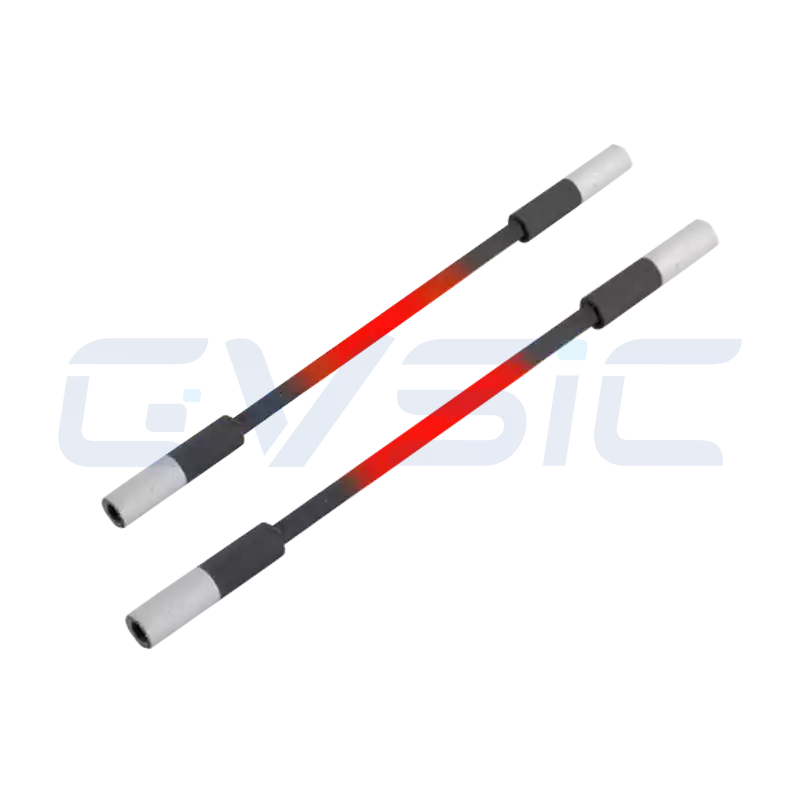
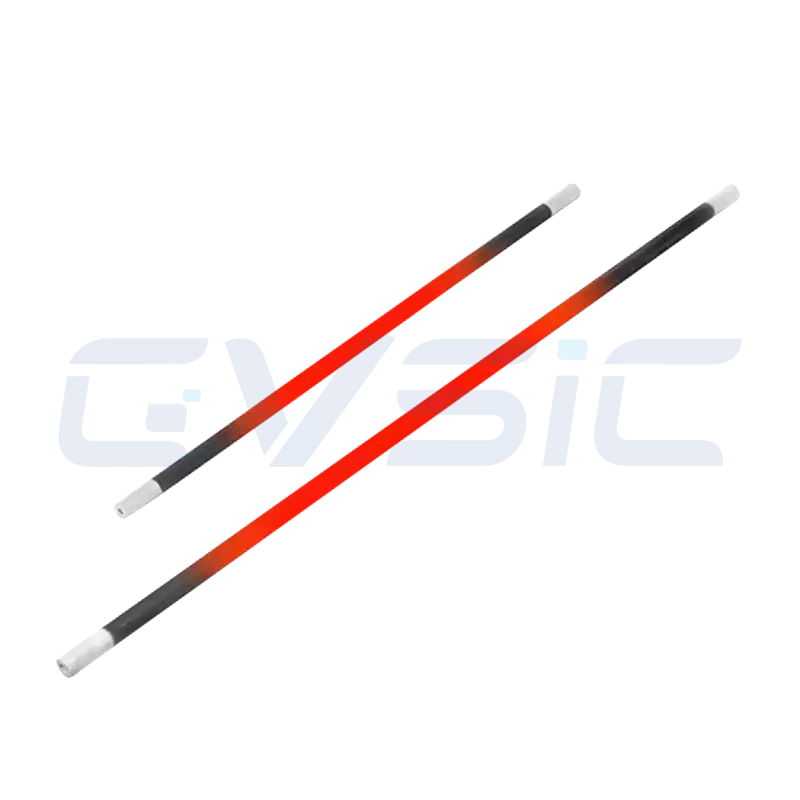
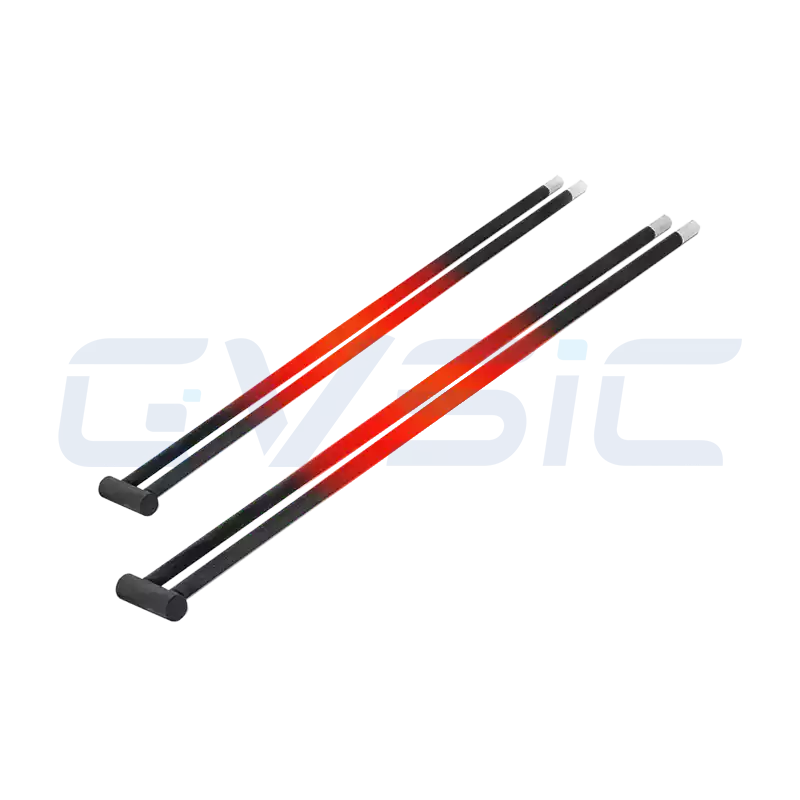
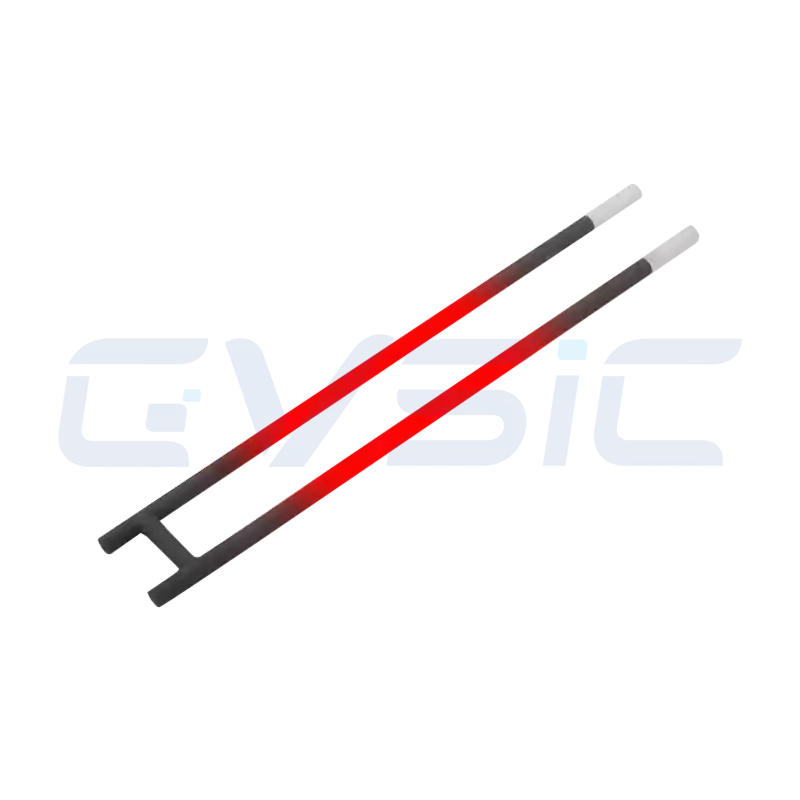

Real-world performance of MoSi2 heating elements in labs
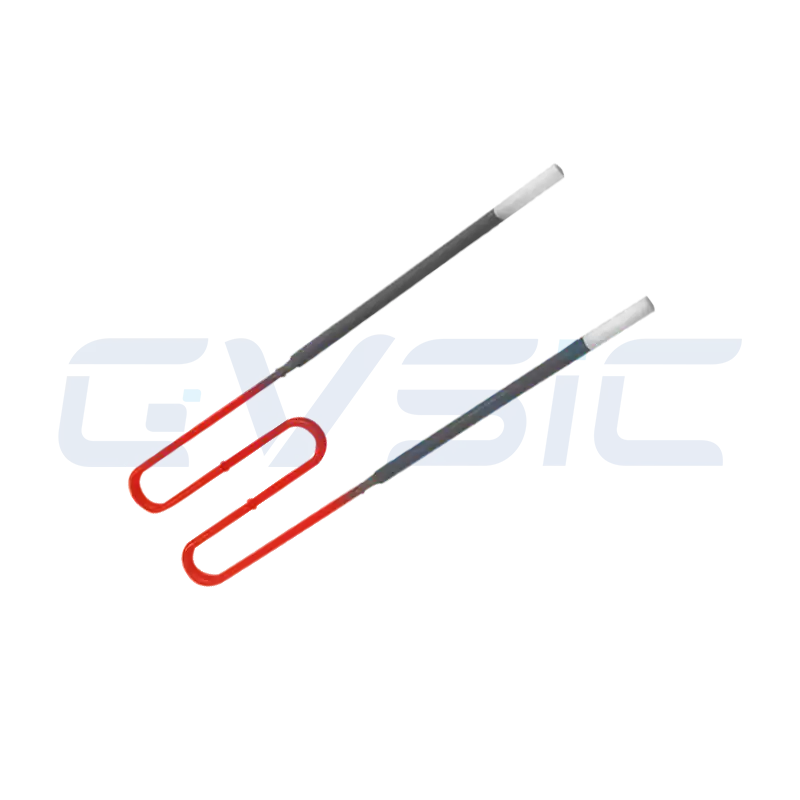
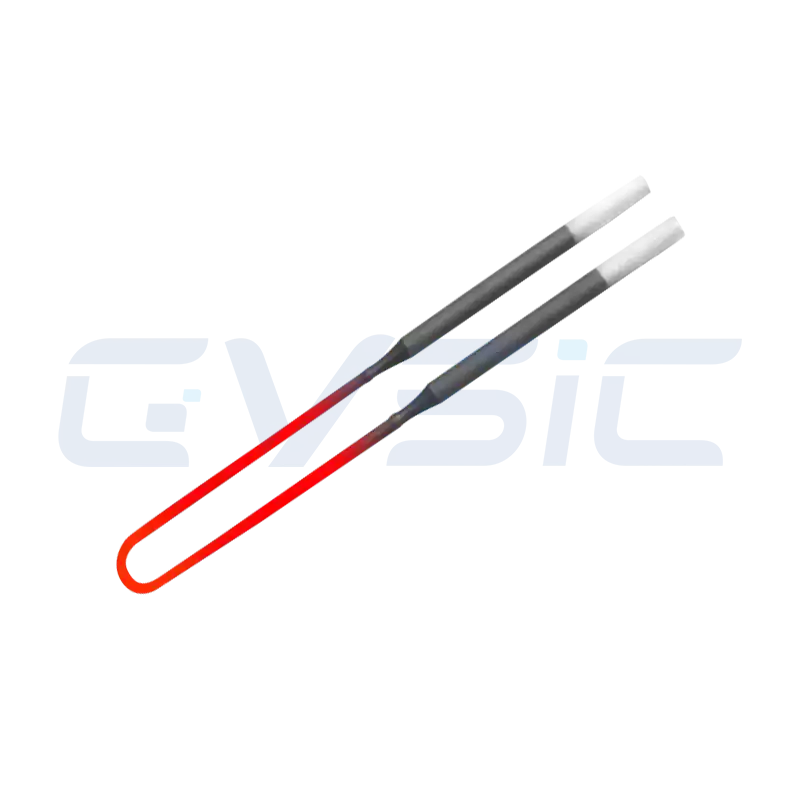
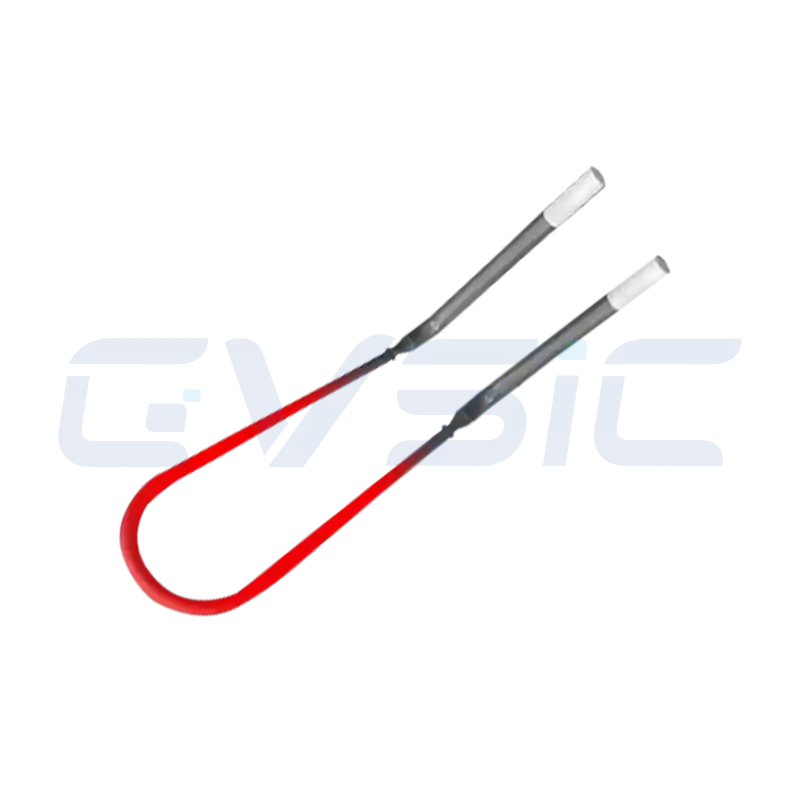
MoSi2 Element(our CVSIC U-type, W-type, and L-type series) is the go-to when labs need to push higher temperatures:
- Temperature range: long-term 1550-1800°C, short-term up to 1850-1900°C
- Typical applications: high-temp ceramic densification, single crystal growth, special alloy melting, ultra-high-temp material testing
- Key performance numbers:
- Surface load can hit 10-15 W/cm² (labs do best at 8-12 W/cm² for reliability)
- Forms a dense Mo₅Si₃ + SiO₂ protective layer in air at 1700°C—excellent oxidation resistance
- High resistance temperature coefficient, but it levels out nicely once you’re in the hot zone.
- Low thermal inertia and fast ramp rates—perfect for experiments that need to hit target temp quickly
Downsides of MoSi2
- Mechanical strength drops noticeably above 1800°C, and it becomes more brittle.
- Sensitive to thermal shock (the biggest risk when cooling fast from high temperatures down to below 400°C)
- The protective layer is damaged in reducing, carbon-containing, or sulfur-containing atmospheres, dramatically shortening life.
When should you choose MoSi2 first?
- Your experiments regularly go above 1550°C.
- You need high power density and super-fast heat-up
- Running long-term at high temperatures in clean air or inert gas
- You’re okay with paying more per element for a higher temperature ceiling.
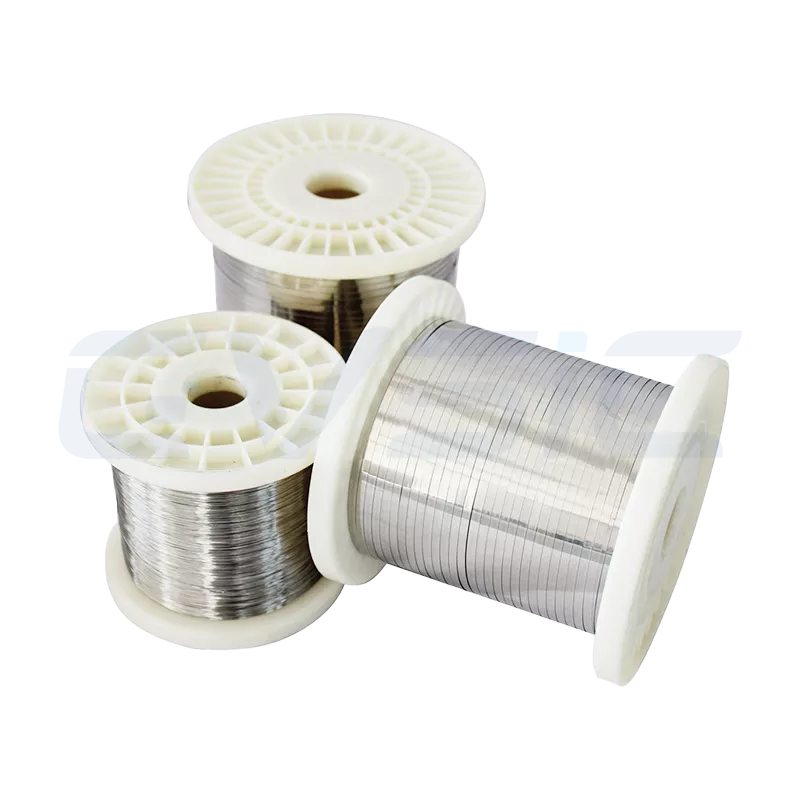
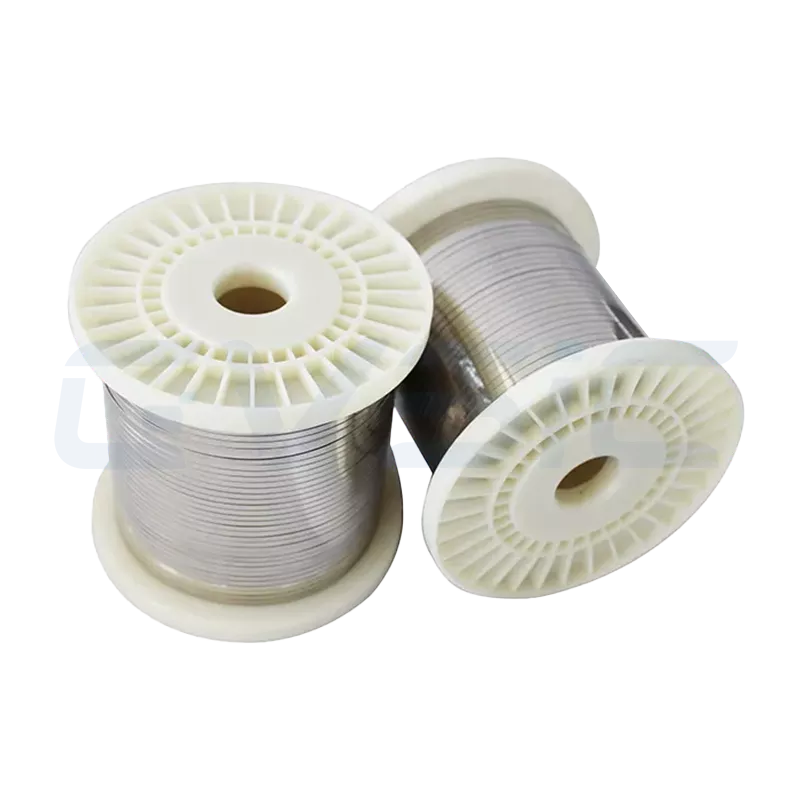
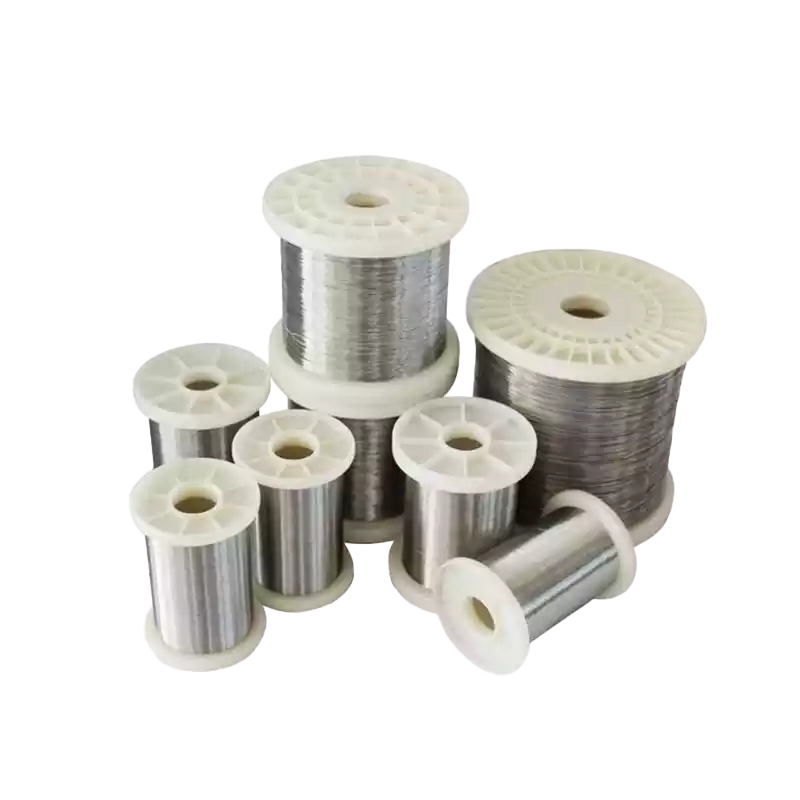
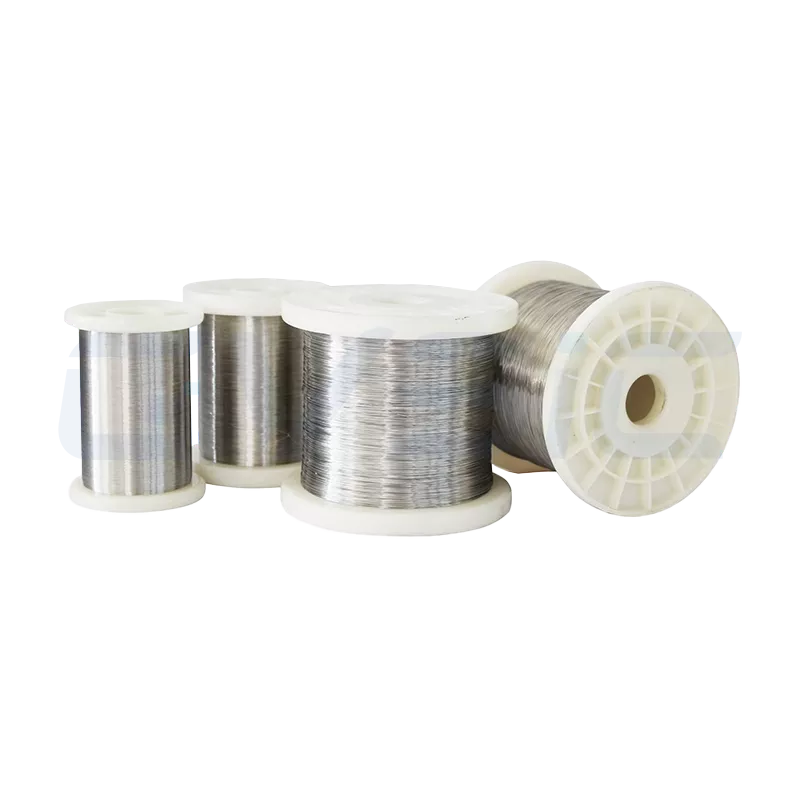
Resistance Wire (FeCrAl / NiCr)
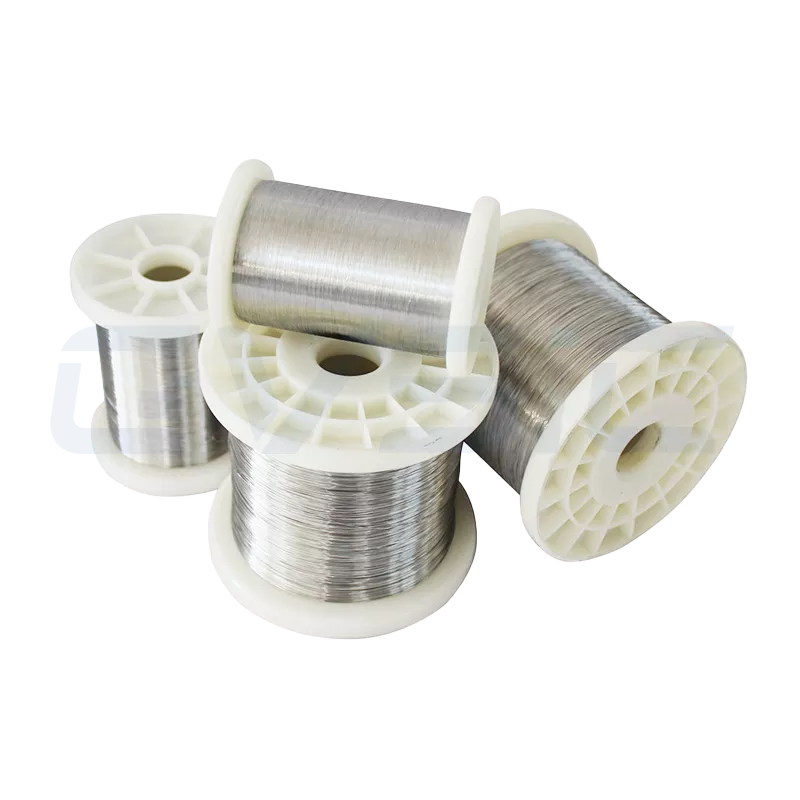
- Temperature range: recommended for stable operation from 900°C to 1200°C, with short-term operation up to 1300°C to 1400°C (above 1350°C, the oxide layer degrades rapidly, reducing lifespan)
- Surface load: for small lab furnaces, 1.5-3.5 W/cm² works well (lower than SiC but still plenty of power)
- Resistance stability: low cold resistance and fairly stable temperature coefficient—at 1200°C after 800 hours, resistance growth is usually just 5-10%, a bit easier to control than SiC
- Oxidation resistance: forms a dense Al₂O₃ layer in air at 1200°C. But if the layer cracks from thermal shock or mechanical damage, oxidation and powdering speed up
- Thermal expansion: about 14-16×10⁻⁶/°C (higher than SiC), but lab furnaces are small, so deformation stays manageable
- Purity and contamination: lab-grade FeCrAl keeps impurities low, but it can still release trace Fe or Cr. In ultra-pure work (like some nanomaterial synthesis), you may need higher-purity wire or shielding.
- Lifespan: When operating at 1100°C, 12–24 months is typical; frequent usage above 1250°C or in reducing atmospheres shortens lifespan to 6–10 months
- Cost: single strands or spirals usually cost only 1/3–1/2 as much as SiC and 1/5–1/4 as much as MoSi₂—ideal for budget-conscious teaching labs or early-stage experiments
Clear weaknesses of FeCrAl
- Oxidation speeds up above 1250°C, leading to hot spots and broken wires.
- When reducing atmospheres (H₂, CO, or carbon) are present, the Al₂O₃ layer is destroyed, causing rapid failure or powdering within months.
- Lower mechanical strength—easy to sag or deform at high temperatures; vertical furnaces need extra supports
- The max temperature ceiling is only 1400°C, so it can’t handle the 1800°C work that MoSi₂ covers.
- In ultra-high-purity experiments, metal evaporation might introduce trace impurities (still much better than industrial wire, but worth checking)
Best lab scenarios for resistance wire
- Medium-low-temperature box or muffle furnaces (800-1200°C): ordinary heat treatment, annealing, powder pre-sintering, glass melting, soil/environmental sample ashing, etc. FeCrAl spirals wound on the walls or placed on shelves are the easiest to install and can easily hit ±3-5°C uniformity.
- Teaching and routine research labs: tight budgets, no need for super-high temps, but fast ramp rates (20°C/min+) and frequent on/off cycles. FeCrAl has low thermal inertia and responds more quickly than non-metallic elements.
- Air environments where atmosphere control isn’t strict: performs best in oxidising or neutral gas. Short-term mild reducing is okay, but long-term use speeds up de-aluminization and embrittlement.
- Low-temperature zones in tube furnaces: as helper heating or the cool section in multi-zone setups—great when combined with SiC or MoSi₂ (I’ve designed plenty of mixed systems).


Core factors for choosing heating elements in the lab
At CVSIC, we start selection by clarifying four key factors: your actual working temperature, the atmosphere in your furnace, how quickly you heat or cool (ramp profile), and your furnace type. Defining these makes it easier to select the right heating element.
Actual working temperature (not the furnace’s rated max)
Lots of furnaces say “max 1600°C,” but daily running might only be 1350°C with occasional peaks at 1500°C.
Rule of thumb: choose based on long-term working temperature
- ≤1450°C continuous → go with SiC
- 1550-1800°C → go with MoSi₂ (or a SiC + MoSi₂ hybrid setup)
Check the atmosphere
- Air or oxidising → both work, SiC is more economical.
- Vacuum or inert gas → MoSi₂ needs low-temp protection, SiC is more forgiving.
- Reducing or carbon-containing → SiC requires special grades; MoSi2 requires coated versions.
Classic failure example:
Running standard SiC in a reducing atmosphere → failed in 2 months (should have lasted 6-12 months)
Ramp profile (how often you thermal shock it)
Common lab habits:
- Cold-start straight up to 1000°C+
- Turning the furnace on and off multiple times a day
This hits Element Life hard. SiC handles moderate shock okay, but MoSi₂ is very brittle below about 400°C.
Takeaway: if you ramp fast and often, put more weight on thermal shock resistance than on max temperature.
Furnace type and installation
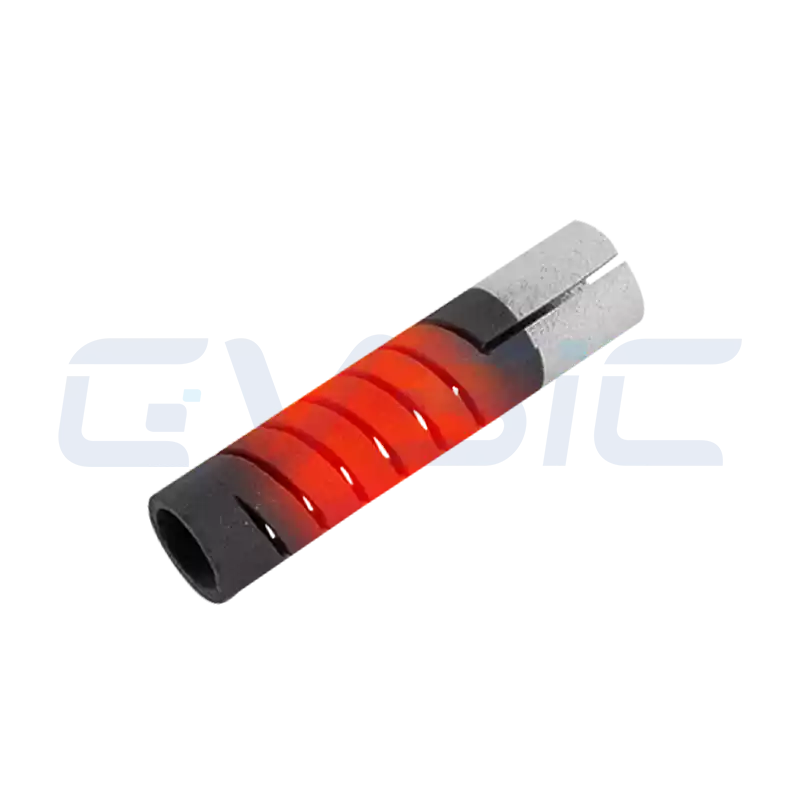
- Box furnaces: U-shaped or spiral SiC, or U-shaped MoSi₂
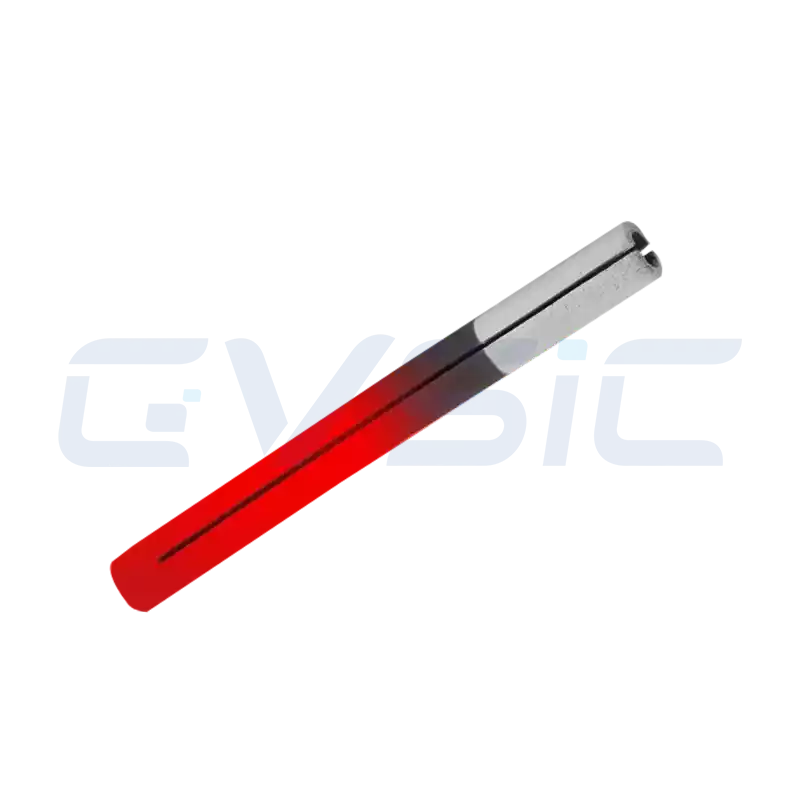
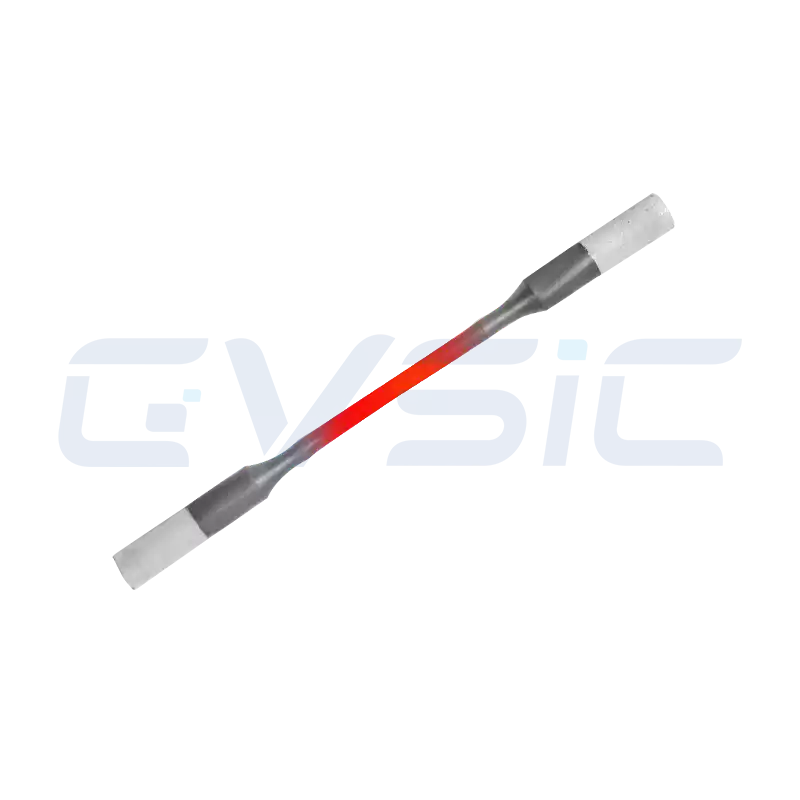
- Tube furnaces: straight SiC rods or W-shaped MoSi₂—watch the end seals
- Vertical furnaces: watch for sagging under self-weight; add supports or use high-strength formulas
Budget and maintenance
Labs care most about the total cost of ownership (element price + downtime + risk of ruined experiments). Sometimes paying a bit more for longer life and better stability actually saves money.
CVSIC Selection Tips
Always build in a safety margin
- Temperature margin: at least 15–20%
- Power margin: at least 20%
Prioritise stability over pushing the limits. Reliable experimental data beats max temperature every time.
Control your ramp curve.
- Go slow at low temps (protect the elements)
- Hold steady at high temps (protect your results)
Set up a preventive replacement plan. Don’t wait for breakage—when resistance rises 20–30%, it’s time to swap
We don’t just sell electric heating elements—we can customise heating elements based on your chamber size, furnace type, target temps, and exact atmosphere.
Choosing heating elements for a high-temp lab isn’t about picking the most expensive or highest-rated option. It’s about finding the one that’s most controllable, repeatable, and predictable under your real experimental conditions.
Once you shift focus from raw material specs to your actual lab needs, the right choice becomes pretty clear.