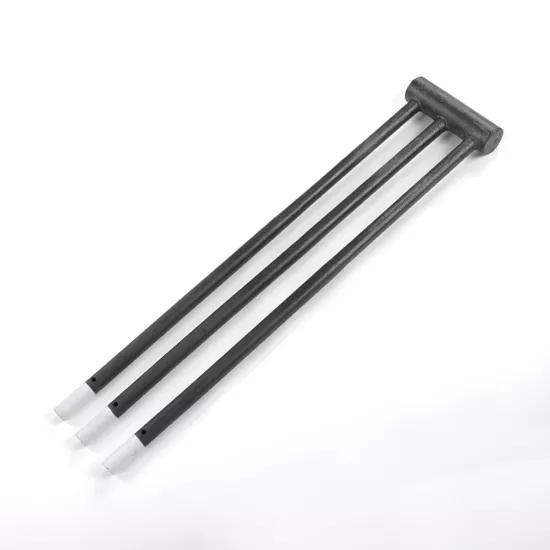
SiC Heating Elements in Semiconductor Manufacturing: Process Requirements, Core Advantages, and Selection Guide
As advanced logic chips push to 3nm, 2nm, and even smaller nodes, and 3D NAND stacks climb beyond 200 layers,…

As advanced logic chips push to 3nm, 2nm, and even smaller nodes, and 3D NAND stacks climb beyond 200 layers,…
Ethan

Molybdenum disilicide heating elements, commonly called silicon molybdenum rods in the industry, are among the most widely used heating elements…
Ethan

What the Metal Heating Industry Fears Most? “The furnace suddenly runs uneven temperatures, elements die in six months, and production…
Ethan

What do high-temp lab heating needs actually look like? Lab furnaces aren’t built like big industrial production lines. The real…
Ethan

Wire diameter is among the most decisive design parameters for FeCrAl heating elements. It directly governs: Many users assume “thicker…
Ethan

Why Does the Same FeCrAl Alloy Show Dramatically Different Lifespan in Different Forms? In high-temperature FeCrAl projects, a frequent complaint…
Ethan

A ton of people have the same wrong idea about FeCrAl wire life: “I went with the high-temp version—why is…
Ethan

FeCrAl resistance wire is the most common electric heating element in industrial furnaces, offering excellent high-temperature resistance and oxidation resistance.…
Ethan

From our earlier guides on FeCrAl fundamentals and the seven primary grades, you already understand: This article delivers a clear,…
Ethan

Product catalogs often list a dozen FeCrAl grades: 0Cr23Al5, 0Cr25Al5, 0Cr21Al6, 0Cr27Al7Mo2, 0Cr21Al6Nb, and more. The real questions are: Memorizing…
Ethan

In real industrial electric heating setups, FeCrAl isn’t “the safe bet”—it’s actually one of the most misunderstood and misused materials…
Ethan

In high-temperature engineering, heating elements are the “heart” of furnace and kiln systems—their durability impacts uptime, energy efficiency, and operating…
Ethan

In the realm of high-temperature industrial heating, silicon carbide and molybdenum disilicide heating elements are the primary materials used. These…
Ethan

Imagine you’re running a ceramic factory where the kiln must operate continuously at 1700°C, and any failure of the heating…
Ethan

In high-temperature industrial settings, whether it’s kiln firing in ceramic factories, semiconductor crystal growth, or new energy battery production, selecting…
Ethan