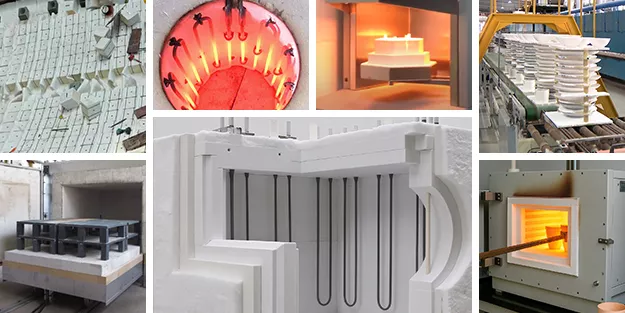

In high-temp furnace design or upgrades, I’ve seen way too many customers hit me with this one question: “The SiC elements max out at 1600°C, so my furnace running at 1500°C should be totally fine, right?” If you’re only looking at the material itself, yeah, you’re not wrong, but in the real industrial world, that thinking often leads to:
- Lifespan is crashing from 12 months down to 3 months
- Resistance is going totally out of control
- Local burnout
There’s only one reason: you’re using the “material limit” instead of the “system limit.” Below, we break it all down from real engineering practice.
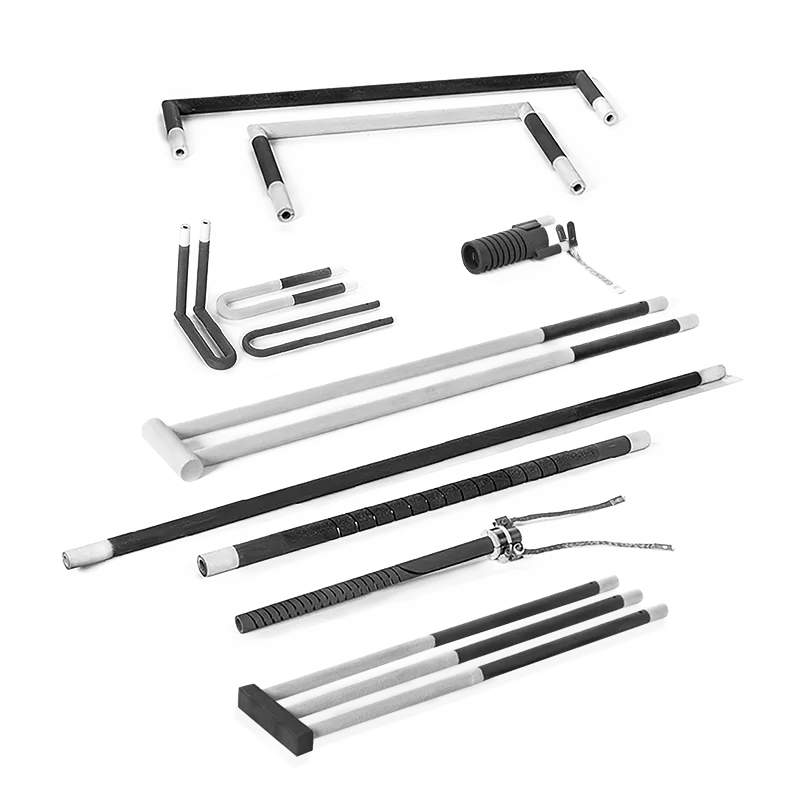
Temperature Range of Silicon Carbide Heating Elements
Rated Maximum Temperature
Typical specs for silicon carbide heater:
- Max surface temperature: 1500°C – 1625°C (short-term limit)
- Common ratings: 1550°C / 1600°C grades
But heads up: this temperature usually means the heater’s surface temp (Hot Zone), not the actual furnace chamber temp.
Recommended Long-Term Operating Temperature
From years of hands-on engineering experience and real project data:
| Environment | Recommended Furnace Temp |
|---|---|
| Continuous Operation (24h industrial furnace) | 1350°C – 1450°C |
| Intermittent Use (lab furnace) | 1400°C – 1500°C |
| Extreme Short-Term Conditions | ≤1550°C |
Bottom line: for steady long-term running, keep it at or below 1450°C.
Temperature Difference Between Cold End and Hot End
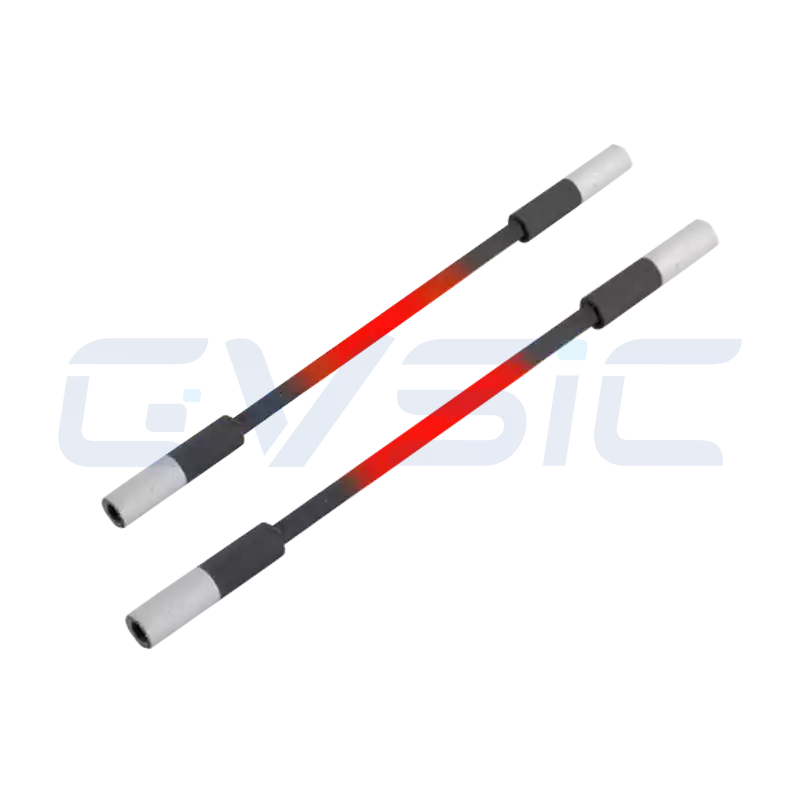
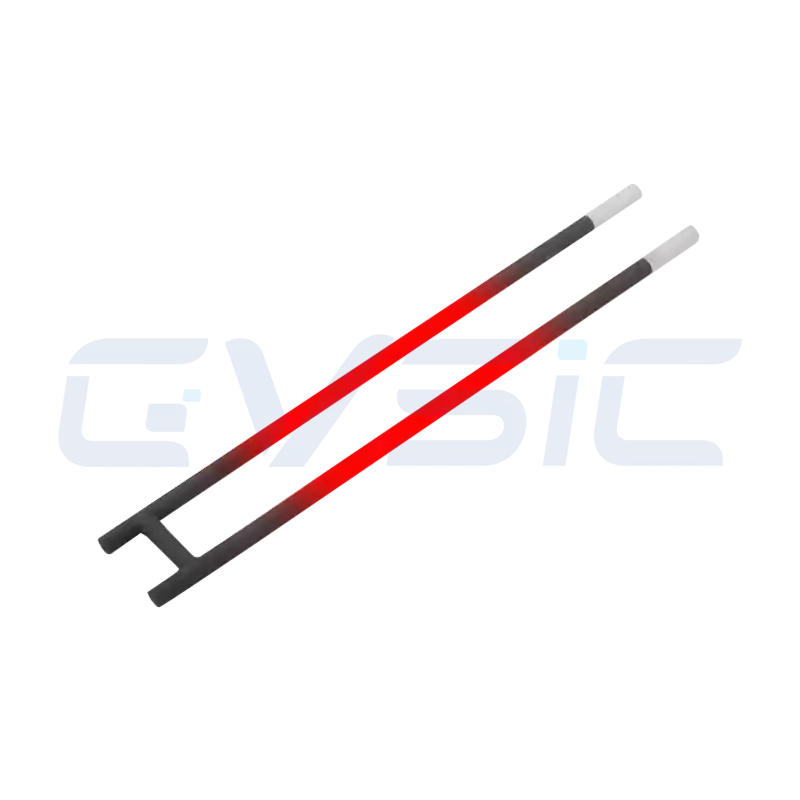
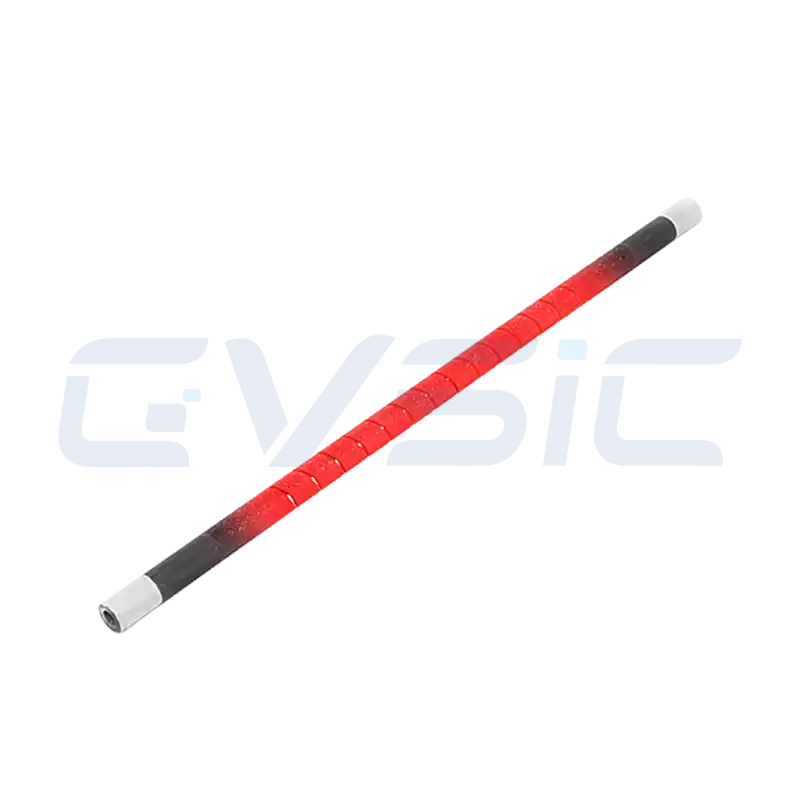
SiC heating elements are built with:
- Hot end (heating zone): the high-temp area
- Cold end (wiring zone): the low-temp area
Typical temperature split:
- Hot end: 1400°C – 1550°C
- Cold end: ≤400°C (ideal)
If the cold end gets too hot, you’ll get:
- Wiring oxidation
- Unstable resistance
- Local overheating and cracks
That’s exactly why some elements last forever at the same temperature while others die fast.



Safe Usage Limits for Silicon Carbide Heating Elements
Temperature is just the surface issue—what really limits SiC elements is the “environment.”
Atmosphere Limits Oxidizing Atmosphere (Air)
- Most stable setup
- Forms a SiO₂ protective layer on the surface
Recommended rating: ★★★★★
Reducing Atmosphere (H₂ / CO/carbon atmosphere) Problems:
- The SiO₂ protective layer gets destroyed
- Carbon or gas reacts with SiC
Results:
- Fast element corrosion
- Lifespan drops more than 50%
Suggestions:
- Keep temperature ≤1350°C
- Or switch to MoSi₂ instead
Vacuum Environment Problems
- No oxygen = no protective layer
- SiC starts to sublimate (material loss)
Suggestions:
- Not recommended for long-term use
- Must stay ≤1400°C
Real Usable Temperatures in Different Atmospheres
| Atmosphere Type | Failure Mechanism | Real-World Safe Temp (No Coating) |
|---|---|---|
| Oxidizing (Air) | SiO₂ protective layer forms | 1450°C |
| Weak Reducing (CO) | SiO₂ gets eroded | 1350°C |
| Strong Reducing (H₂) | Direct reaction consumes SiC | 1250–1300°C |
| Vacuum | SiC sublimation | ≤1400°C |
Atmosphere Type Failure Mechanism Real-World Safe Temp (No Coating)
Conclusion: The temperature ceiling isn’t a fixed number—it gets dynamically lowered by whatever atmosphere you’re in.
Surface Load (W/cm²)
This is the key spec that a ton of customers completely overlook. Definition: Power per unit surface area.
Typical recommendations:
- Low load: 5–7 W/cm² (longest life)
- Medium load: 7–10 W/cm²
- High load: 10–12 W/cm² (higher risk)
Bottom line: higher load = higher temp = faster aging.
Aging Effect (Inevitable but Controllable)
SiC elements have one classic trait: resistance slowly climbs during use (aging). It shows up as:
- Dropping current
- Dropping temps
- Not enough power
If you don’t adjust, the furnace never hits your setpoint. Solutions:
- Use an adjustable voltage transformer
- Group-control the elements
Thermal Shock Limits: SiC handles thermal shock pretty well, but not forever.
Risk situations:
- Cold furnace straight to full power
- The hot furnace was suddenly hit with cold air
Consequences:
- Microcracks
- Straight-up fracture
Suggestion: keep ramp rate at ≤200°C/h for industrial furnaces.
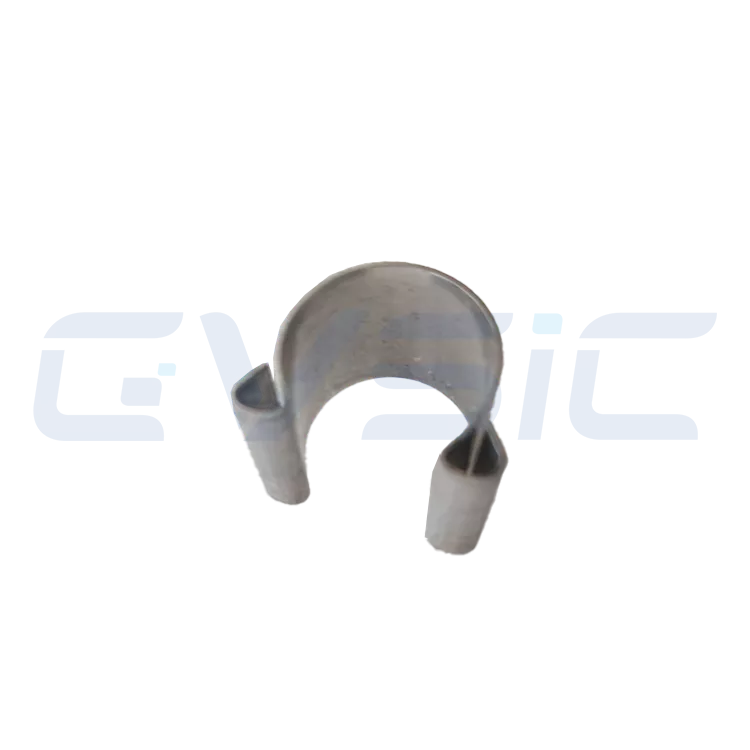
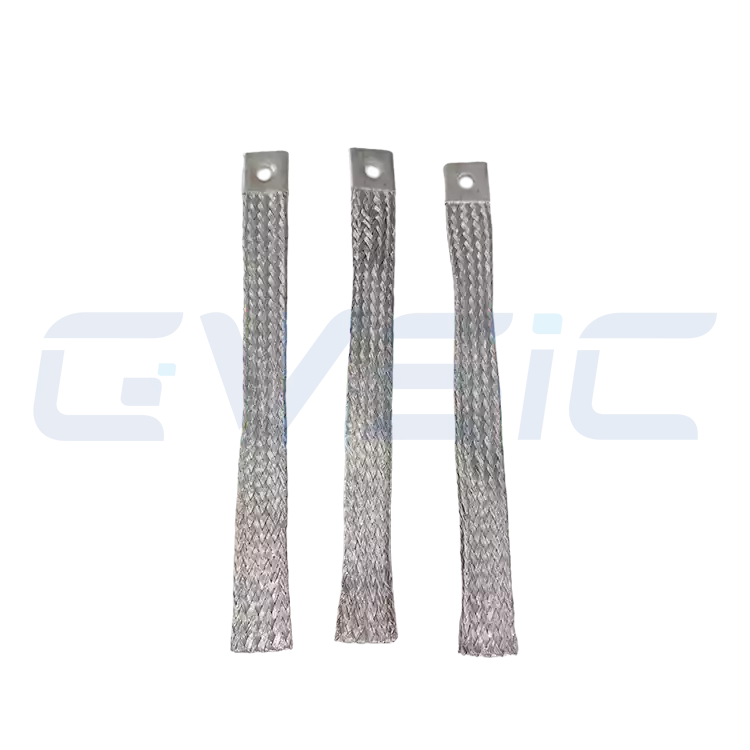
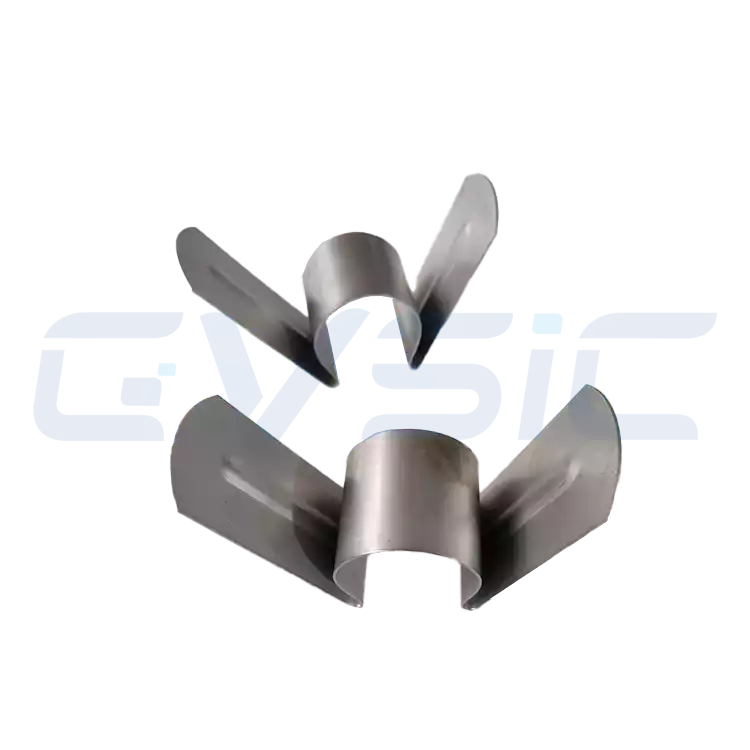
Coating/Plating: Extra Protection for Specific Environments
When the atmosphere stops being “ideal oxidizing air,” problems kick in:
- The SiO₂ layer can’t stay stable
- The surface starts exposing raw SiC
- Oxidation, reduction, and volatilization all happen at once
That’s when special coating/plating processes on silicon carbide heating elements can seriously boost lifespan and performance—exactly what you need for tougher furnace applications.
CVSIC’s Five Series Silicon Carbide Heating Elements
Starting from standard SiC heating elements, we offer five different coating options to handle high-temp limits, big temp swings, continuous duty, strong reducing (H₂), and alkali corrosion.
| Working Condition | Recommended Coating | Safe Temperature |
|---|---|---|
| Air + Continuous Operation | Coating 1 | ≤1450°C |
| Air + High-Temp Fluctuation | Coating 2 | ≤1500°C |
| Reducing Atmosphere (Weak) | Coating 4 | ≤1400°C |
| Strong Reducing (H₂) + Alkali Corrosion | Coating 4 / 5 | ≤1350°C |
| High-Temp Limit (Near 1550°C) | Coating 5 | ≤1520°C |
Working ConditionRecommended CoatingSafe Temperature
Temperature Strategies for Different Applications:
Ceramic Sintering Furnace
- Working temp: 1400–1500°C
- Suggestions:
- Go with high-purity SiC + Coating 1
- Keep load ≤8 W/cm²
- Temp range: 1200–1600°C
- Features:
- Intermittent use
- Big temperature swings
Pick standard silicon carbide heating elements + Coating 2 to slow down oxidation and boost the self-healing effect.
Glass Industry
- Temp: 1300–1450°C
- Features:
- Continuous running
- Tricky atmospheres
Use silicon carbide heating elements + Coating 5 to build an alkali-resistant barrier, block corrosion, and extend lifespan.
Common SiC Element Mistakes
- Error 1: Treating the “max temperature” as your everyday “working temperature” Result: Burn out a whole batch in 3 months
- Error 2: Ignoring the atmosphere. Running SiC in a reducing atmosphere → Straight-up corrosion failure
- Error 3: Bad cold-end design. Wiring zone overheats → Local burnout
- Error 4: Overloading the elements Fast initial heat-up → Super-short lifespan later
CVSIC Engineering Tips: If you only remember five things, make it these:
- Long-term running temp ≤1450°C
- Stick with oxidizing atmospheres whenever possible
- Keep load at 6–8 W/cm²
- Cool the cold end properly
- Leave room for voltage tweaks to handle aging
CVSIC provides one-stop heating solutions for high-temperature industrial applications worldwide. We are a leading electric heating element manufacturer in China, offering a comprehensive range of high-temperature furnace heating elements.
FAQ
Can CVSIC silicon carbide heating elements be used in vacuum furnaces?
Yes, but keep it under 1550°C—the lifespan will be 20-30% shorter than in air. The protective film grows more slowly in a vacuum with less oxidation, but there’s still a slight risk of SiC sublimation. We’ll give you vacuum-specific selection advice.
Is the 1600°C rating for the furnace chamber or the element’s surface temperature?
It’s the furnace chamber temp. The element surface usually runs 150-300°C hotter. When CVSIC says “max 1600°C,” it means safe furnace temp; the surface can briefly hit 1625°C.
What’s the max temp in a hydrogen atmosphere?
Strictly no more than 1300°C—otherwise it generates methane that corrodes the SiC. We recommend switching to MoSi2 heating elements (we supply them too, up to 1850°C).
What’s the difference in temperature range between MoSi₂ and SiC?
SiC gives the best bang for the buck up to 1600°C. MoSi₂ can push to 1850°C, but costs more and is more brittle. For ultra-high-temp jobs, we’ll help you with a mixed SiC + MoSi₂ setup.