
A ton of people have the same wrong idea about FeCrAl wire life: “I went with the high-temp version—why is it still dying so fast?”
Truth is, FeCrAl’s lifespan is rarely just about its “max rated temperature.”
It is actually a bunch of engineering factors that all affect each other.
Service life basically means how long it runs from brand-new until resistance jumps by more than 10%, the oxide layer fails, or the wire snaps.
In perfect conditions, you can get over 10,000 hours, but in the real world, it usually dies way sooner because the operating setup does not match the material.
Temperature vs. Power Density: The #1 Thing That Actually Matters
Here is the thing—temperature by itself is not what kills it
When FeCrAl runs in a stable, even, continuous temperature:
- As long as the metal stays under its long-term limit (usually 1300–1400°C)
- The protective oxide layer keeps repairing itself
- Aging happens slowly and predictably
In the lab, just running hot does not wreck it immediately. In ceramics or glass plants, if you keep temperature swings inside ±20°C, you can easily double or triple the life. Seven Major FeCrAl Alloy Grades Differences
But power density? That is the real game-changer
The dangerous situation is when:
- Surface temp still looks fine
- You are cramming way too many watts per square inch
- Hot spots keep showing up again and again
That causes:
- The oxide layer never gets a chance to build up and stabilize properly
- Aluminum is getting burned through way too fast in those spots
- The resistance drifts fast until the wire finally breaks
Bottom line: in electric heating systems, overloading the power density usually kills the wire faster than running it just a little over temp.
For example, in metal heat-treating or food-processing equipment, if the wire is too thin (<1 mm) or the layout is not even, local hot spots can run 20–50°C hotter than the average. That pushes oxidation rates up to 0.5–1 g/m² per hour and can cut life by 50% or more.
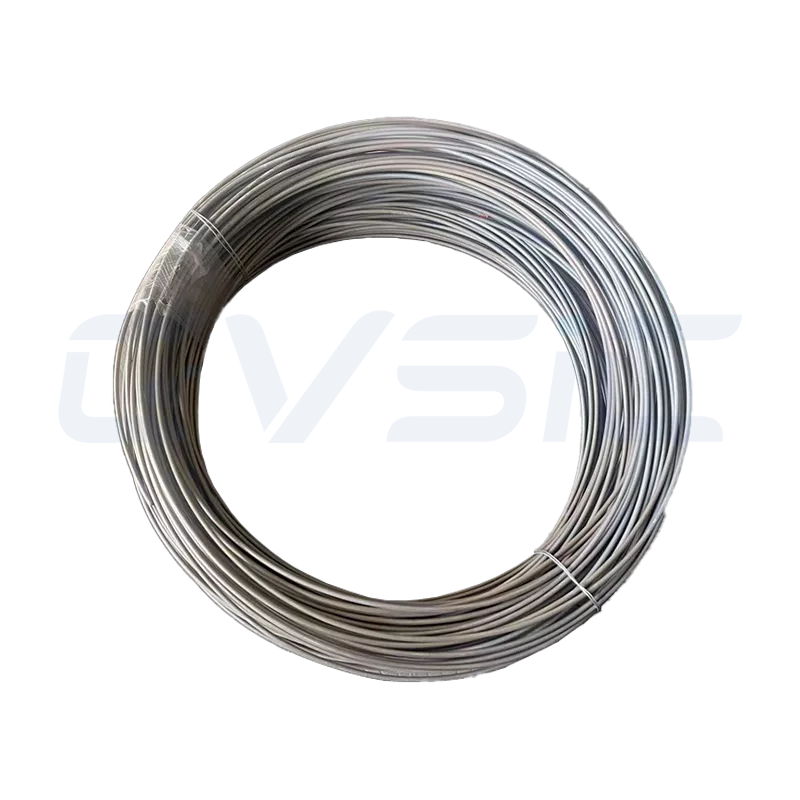
Engineering tip: When designing, always calculate surface loading first, use spiral-wound FeCrAl wire to spread heat evenly, and put thermocouples on potential hot spots.
Atmosphere Effects: One of the Most Overlooked Life-Killers
Lab air is not the same as a real industrial atmosphere
FeCrAl looks great in clean lab tests because:
- Oxygen pressure stays steady
- The Al₂O₃ protective layer keeps forming nicely (4Al + 3O₂ → 2Al₂O₃)
However, in actual factories, you often deal with:
- Water vapor
- Reducing gases like CO or H₂
- Sulfur or halogens
In chemical or oil & gas plants, these contaminants can double oxidation rates and make the oxide layer peel off more easily.
Oxidizing and Corrosive Gases: A Test of Chemical Stability
Bad atmospheres do not wreck the wire overnight—they quietly destroy it by weakening the oxide film’s adhesion, stopping self-healing, and causing repeated spalling.
Eventually, the bare metal stays exposed, and aluminum gets used up fast—even when temps “do not look too high.”
For example, in humid conditions (>50% RH), electrochemical attack can seriously weaken the Al₂O₃ protection and halve the life.
Key takeaway: A huge part of FeCrAl’s life is “spent early” due to the bad atmosphere. Using versions with a tiny amount of rare-earth elements (like 0.01–0.1% cerium) makes the oxide layer stick better and last longer.
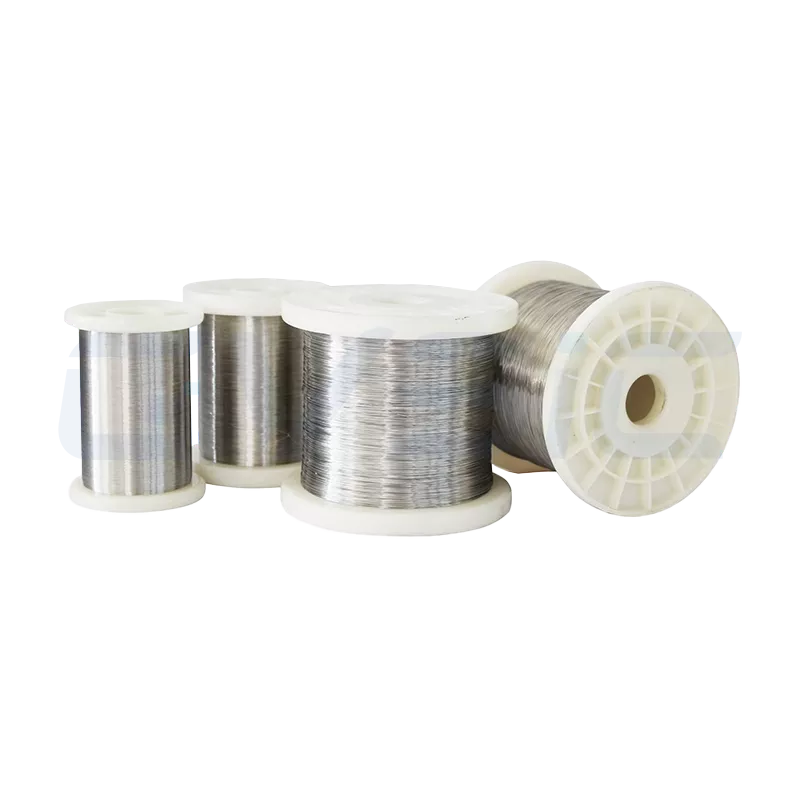
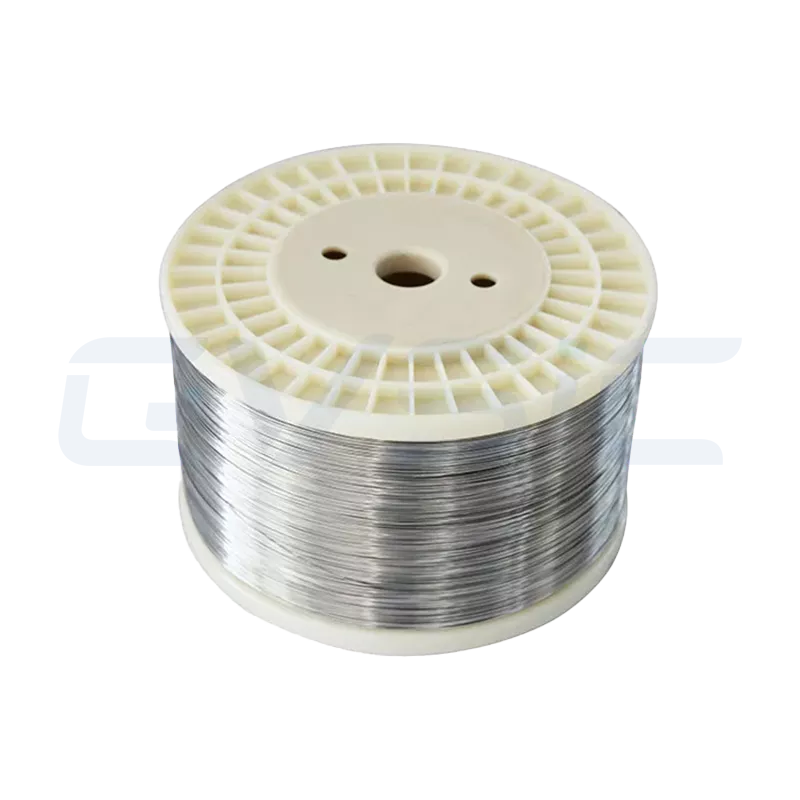
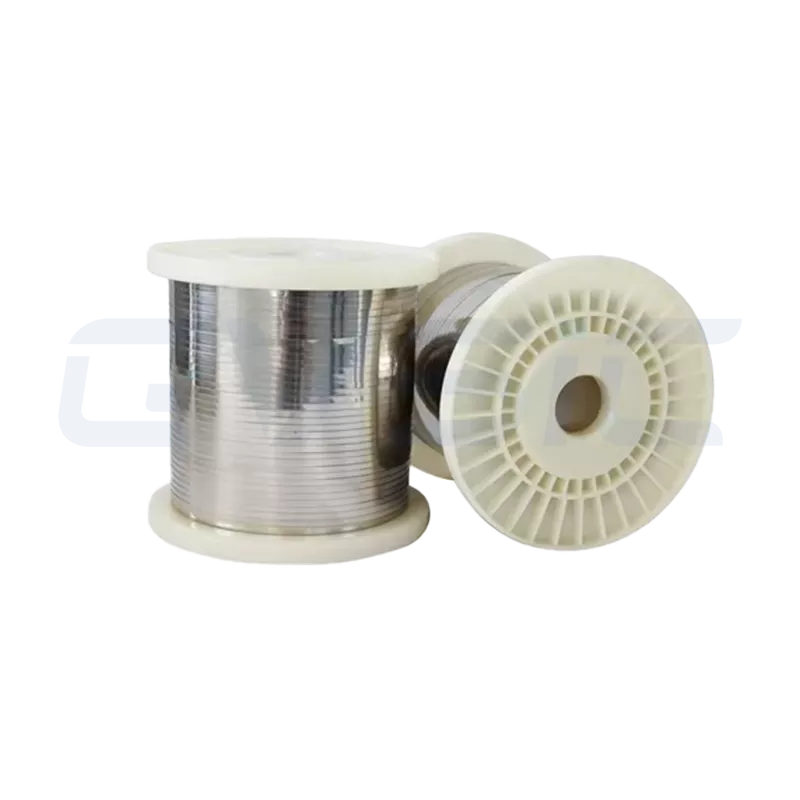
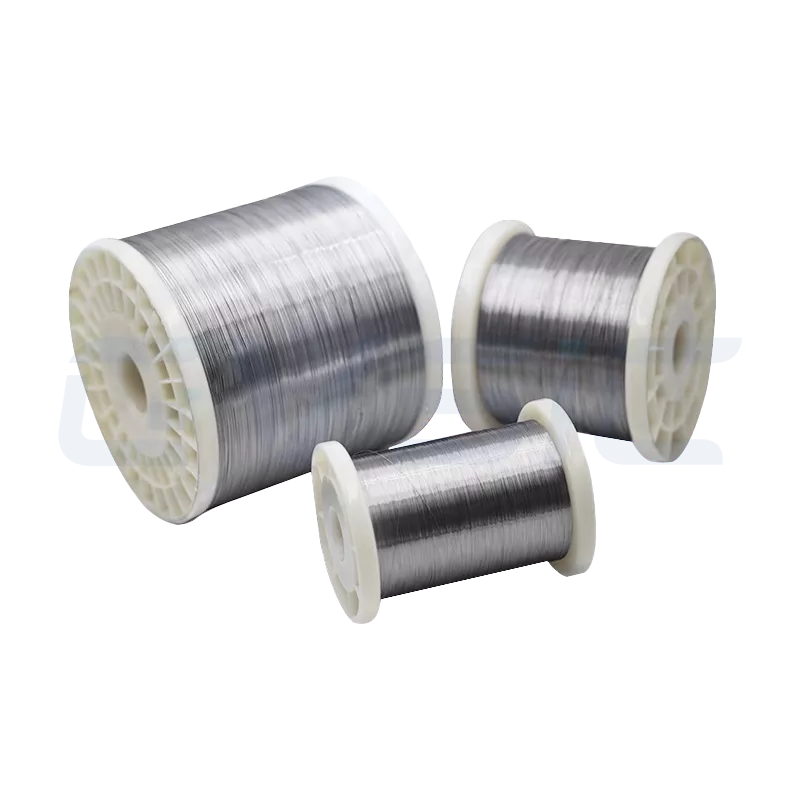
CVSIC offers customization services for FeCral.



Mechanical Stress & Thermal Fatigue: The Physical Durability Challenge
FeCrAl handles steady static loads well
Under good design, constant tension or its own weight does not hurt life much. Density around 7.1–7.3 g/cm³, thermal expansion ~15×10⁻⁶/K, yield strength ~50 MPa at 1000°C—it is solid for static high-heat setups. FeCrAl Resistance Wire: The Complete Engineer’s Guide
The real danger is repeated heating and cooling stress
Things like expansion getting blocked during heat-up, snap-back on cool-down, or fixtures that do not let it move freely cause micro-cracks to build up at grain boundaries and crack the oxide in stressed spots.
Breaks almost always happen near the fixed points—not in the hottest middle section.
In vehicle heaters or vibrating setups, more than 500 thermal cycles can easily cut life by 30–50%.
Classic sign: “It always breaks right next to the support, never in the hottest middle part.”
Tips: Use ceramic supports, do not bend them too sharply (minimum bend radius = 5× wire diameter), and check them every 6–12 months.
Start-Stop Frequency: The Silent Life-Shortener
Running continuously vs. turning on and off a lot makes a massive difference
FeCrAl life drops hard when you have:
- Multiple cold starts every day
- Fast heat-up and cool-down
- Big temperature swings
Every cycle damages the oxide layer, forcing it to rebuild, and it eats into the aluminum reserve each time.
In home appliances or textile dryers, frequent cycling can drop life to one-third of what it could be.
Interestingly, higher-aluminum versions are not always better here—they are more brittle and crack more easily under thermal shock. FeCrAl Oxidation Resistance Explained
When equipment cycles on/off a lot every day, cycling resistance often matters way more than max temperature rating.
Other Factors: Material Purity & Power Control
Beyond the big ones, purity matters a lot (keep sulfur <0.01% and phosphorus <0.02%)—high-purity FeCrAl keeps resistance change under 5% throughout its life.
Running voltage too high (>10% over rating) or high humidity also speeds up corrosion. Using an SCR controller to keep power steady can add many extra hours.
Practical Tips to Get the Most Life Out of FeCrAl Resistance Wire
FeCrAl Resistance wire life depends on operating temperature, atmosphere, mechanical stress, material purity, and stable power working together.
Choose the right variant (like cerium-doped FeCrAl), design smart (wire diameter 1–5 mm, even heat distribution), and maintain regularly (check every 500 cycles or so). That way, you maximize performance in high-temp furnaces, heating elements, or industrial kilns.