
What the Metal Heating Industry Fears Most?
“The furnace suddenly runs uneven temperatures, elements die in six months, and production stops while you swap them out.”
A lot of customers in the metal heat-treatment industry have the same wrong idea: “Silicon carbide heating elements handle high temps, so they should be fine for my 1400°C furnace.”
Because they don’t fully understand the actual furnace conditions or pick the wrong element, they end up with wildly inconsistent element life or constant breakages.
Today, CVSIC is sharing real application scenarios, advantages, selection tips, and lessons to avoid pitfalls with silicon carbide heating elements in the metal heating industry. We hope this helps metal heat-treatment customers run their heating systems more reliably, longer, and at lower cost.
Typical Requirements for Heating Elements in Metal Heating
Metal processing heating processes mostly sit in the 800-1450°C range. Common electric heating elements include SiC rods and FeCrAl resistance wire. Typical processes:
- Heat treatment: annealing, normalizing, quenching, tempering (850-1150°C)
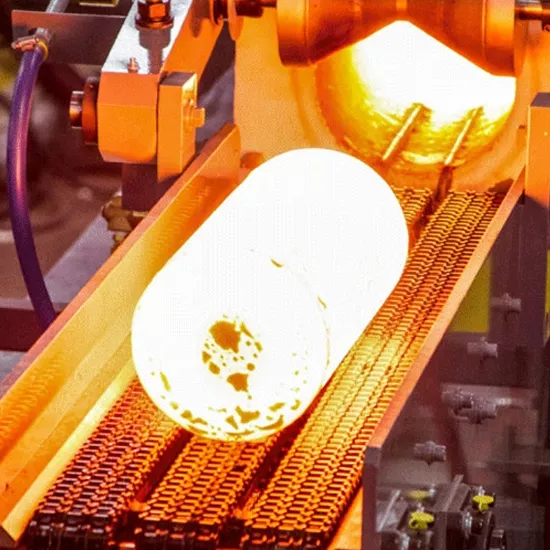
- Forging preheat: steel billets and forgings (1100-1300°C)
- Melting and holding: aluminum and copper alloy furnaces (700-1100°C, some zinc alloys higher)
- Powder metallurgy sintering: metal powder compacts (1050-1350°C)
These processes all share the same pain points: temperature uniformity within ±5-10°C (to avoid part performance differences), possible reducing gases or dust in the atmosphere, frequent furnace start/stop cycles, fast production pace, and the need for long element life to cut downtime costs.
Silicon carbide heating elements shine right in that 800-1450°C sweet spot, especially where strong thermal shock and oxidation resistance are needed.
Real Application Scenarios for SiC in Metal Heating Furnaces
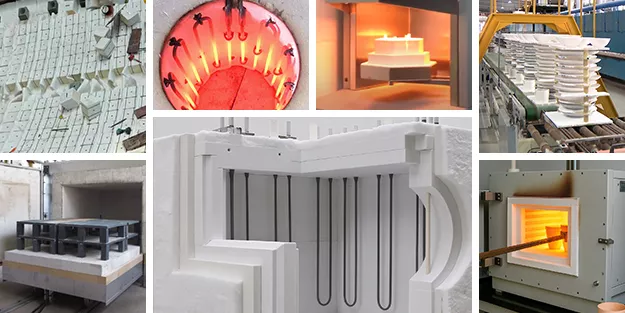
Heat Treatment Furnaces (box, pit, trolley)
- These are the most common homes for SiC heating elements.
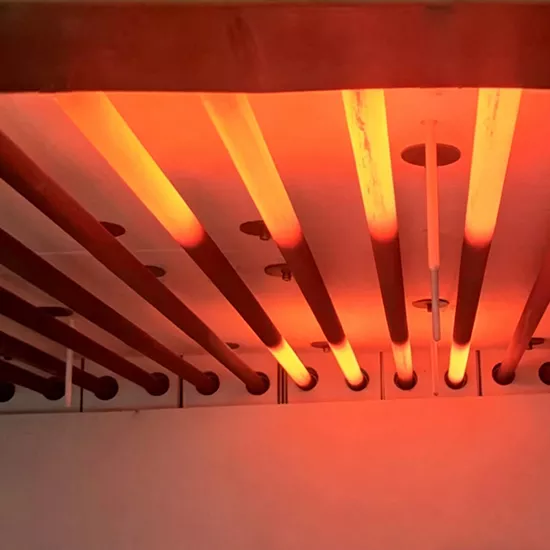
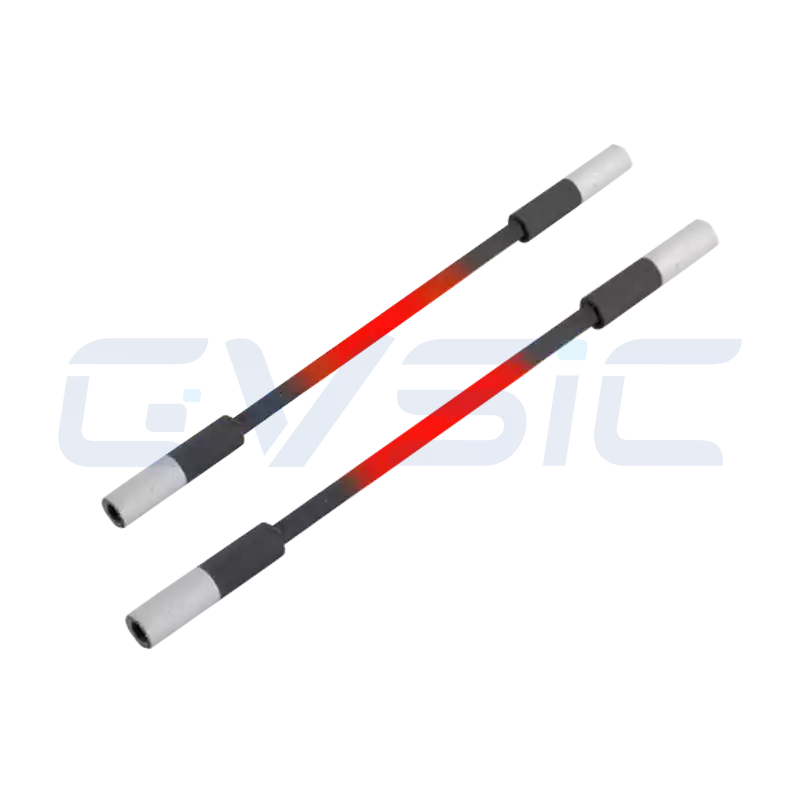
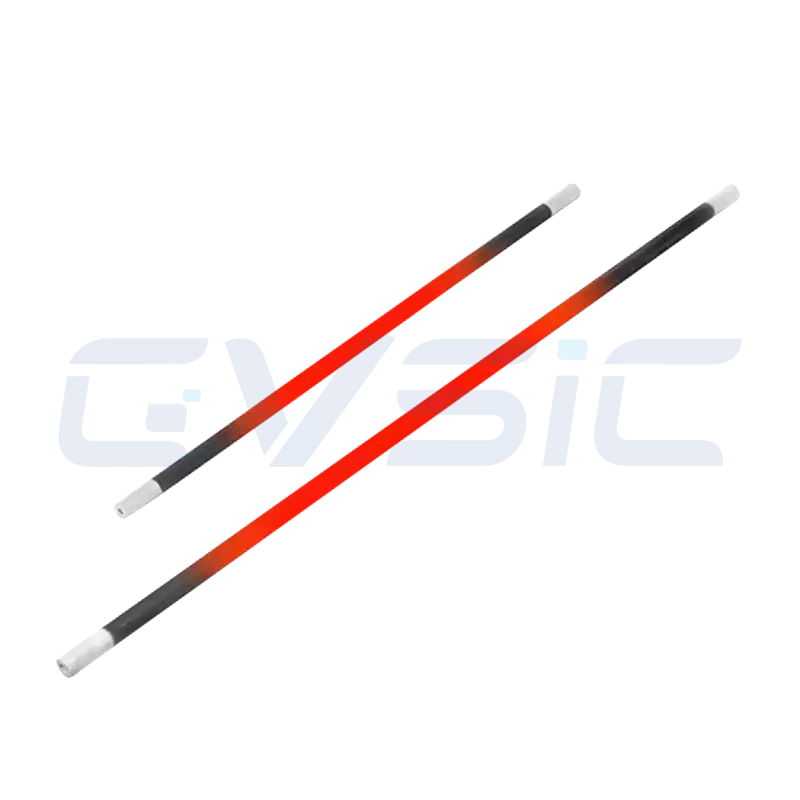
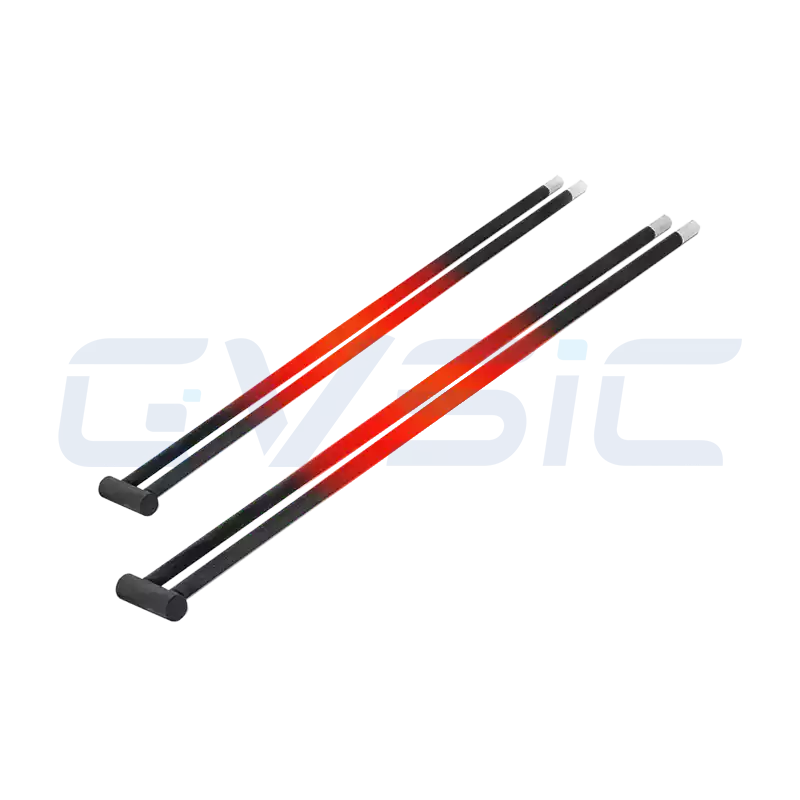
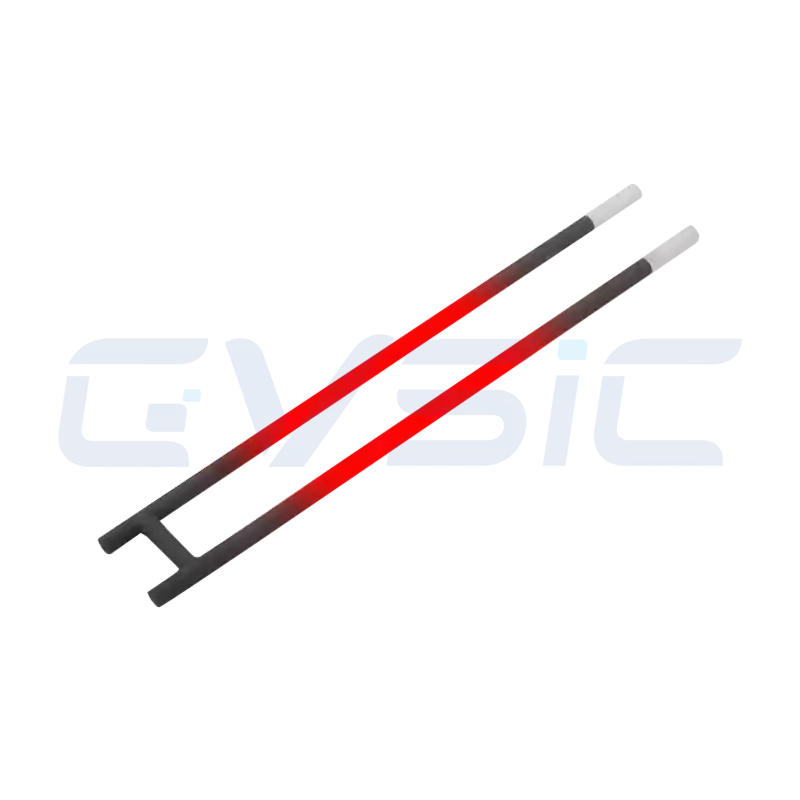
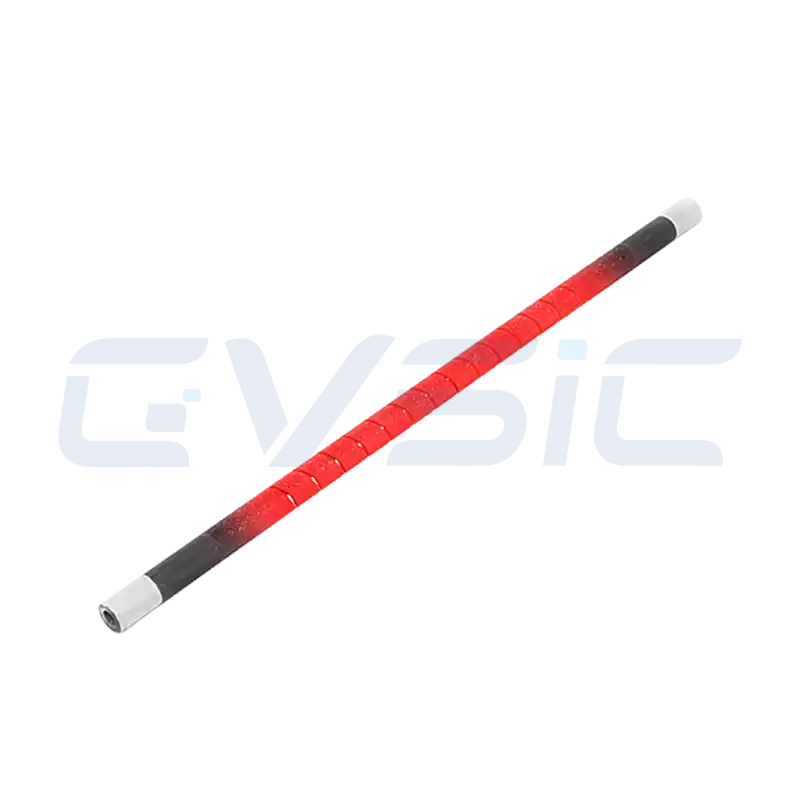
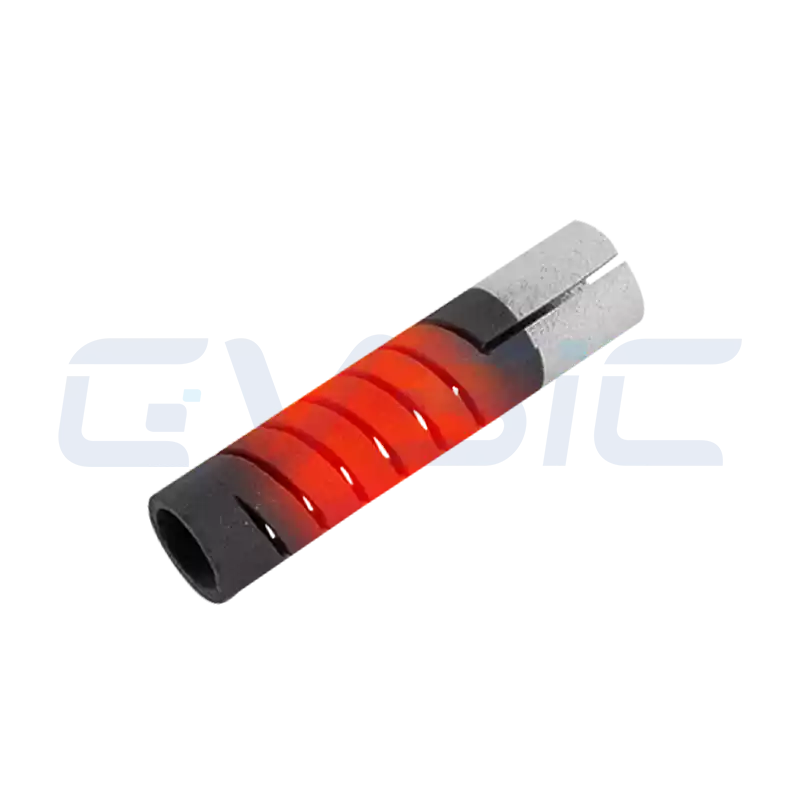
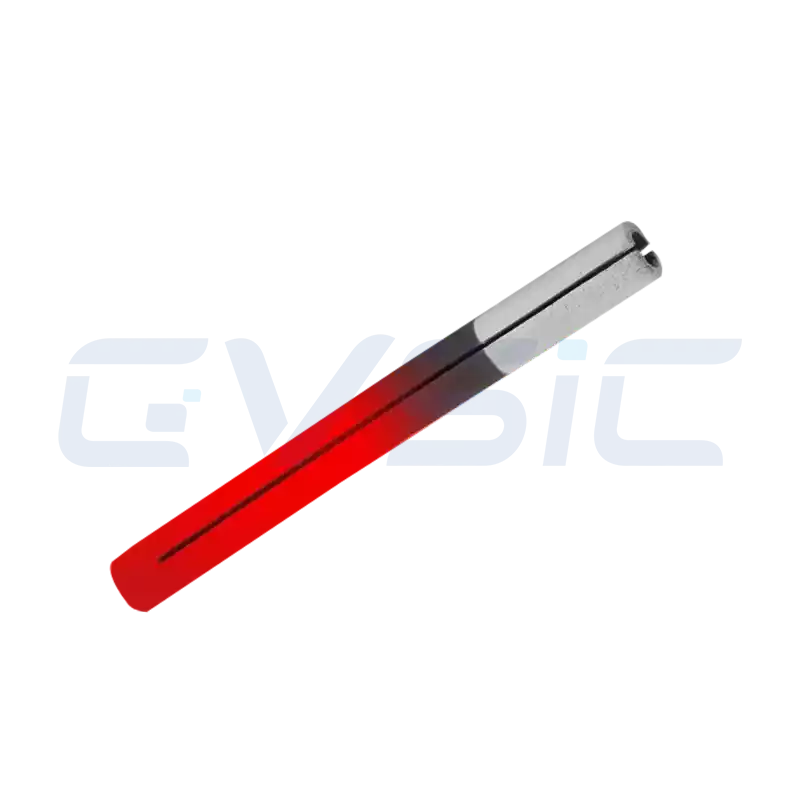
- Typical setups use U-shaped, spiral, or straight-rod SiC, mounted on side walls or the roof.
- Operating temperatures are usually 1050-1250°C, with a surface load of 4-7 W/cm².
CVSIC SG-type SiC elements ran for 22 straight months on a trolley heat treatment furnace at an auto parts plant. Resistance increased by only 9.8%, workpiece hardness uniformity improved from ±12 HB to ±4 HB, and the customer reduced downtime by 35%.
Forging Heating Furnaces
- Steel billets need a fast ramp to 1200-1300°C and a steady hold.
- SiC has low thermal inertia, ramps at 12-18°C/min, and handles thermal shock extremely well (room temperature to 1250°C repeated cycling without cracking).
- Unlike traditional resistance wire, SiC keeps a stable oxide film at high temperatures and rarely develops hot spots that cause local overheating.
Aluminum Alloy Melting and Holding Furnaces
- While immersed SiC tubes with thermocouples are common, many plants also use SiC elements for radiant or auxiliary heating.
- Temps usually 700-1100°C. SiC stays stable even in molten salt or mildly corrosive atmospheres—as long as the surface load stays under 6 W/cm², life easily exceeds 24 months.
Powder Metallurgy Sintering Furnaces
Metal powder sintering needs a clean environment. High-purity SiC versions have very low impurities and won’t volatilize contaminants as some metal wires do.
Why More Metal Shops Are Switching to SiC Heating Elements
Here’s a straight comparison between SiC and traditional FeCrAl/NiCr resistance wire or MoSi₂ (based on real CVSIC field data):
| Aspect | SiC Advantage | vs FeCrAl | vs MoSi₂ |
|---|---|---|---|
| Temperature Range | Stable long-term at 1450°C | Far above FeCrAl’s 1250°C limit | Overkill for typical metal temps; higher cost |
| Thermal Shock & Life | Expansion ~4.5×10⁻⁶/°C; 3-5× better shock resistance | 1.5-2.5× longer life at same power | Weaker shock resistance |
| Temperature Uniformity | Uniform diameter, large radiating area → easy ±5°C control | Prone to hot spots | Good but unnecessary here |
| Oxidation/Corrosion | Natural SiO₂ film holds up well | Oxide layer breaks above 1250°C | Strong but expensive |
| Energy & Maintenance | Slow power decay; fast U/spiral replacement | Slower install for wound wire | Higher cost overall |
| Total Ownership Cost | Higher upfront but pays back via longer life and less downtime | Cheaper initially | Much more expensive |
SiC isn’t perfect. In strongly reducing atmospheres (high H₂ or high carbon potential) or with fluorine- or strongly alkaline slag, special coatings are needed to prevent life drop.

Typical SiC Applications in Metal Heating
Steel Heat Treatment (annealing / normalizing / pre-quench heating)
Key parameters:
- Temp range: 800–1200°C
- Atmosphere: air / weak reducing
- Furnace types: box, trolley, continuous
Strengths: high uniformity needed, long continuous runs, sensitive to temp swings (affects microstructure).
SiC wins with strong infrared radiation, fast ramp, and lower cost than MoSi₂.
Watch out: long-term oxidation slowly raises resistance—plan for periodic voltage tweaks.
Aluminum & Aluminum Alloy Heating (melting / holding)
Key parameters:
- Temp range: 600–900°C
- Atmosphere: air / molten metal vapor
Aluminum vapor can attack the SiC surface, accelerating the damage to the oxide layer. Keep surface load ≤6 W/cm².
Common issues: surface powdering or local hot spots leading to cracks.
Copper & Copper Alloy Heating
Key parameters:
- Temp range: 800–1100°C
- Atmosphere: strongly oxidizing
High uniformity required; atmosphere can fluctuate. SiC works well, but copper vapor + oxidation can double the aging rate.
Powder Metallurgy Sintering (iron-based / copper-based)
Key parameters:
- Temp range: 1000–1300°C
- Atmosphere: reducing (H₂ / N₂)
Big warning: standard SiC is unstable in strong reducing gas—MoSi₂ is usually the better choice here.
If you must use SiC, reduce the temperature to below 1250°C and tightly control the atmosphere’s purity.
How to Select and Use SiC Heating Elements Correctly in Metal Heating
- Resistance drift: SiC resistance grows over time due to oxidation. You’ll see a drop in current, a drop in power, and the furnace struggling to hit the setpoint. If resistance jumps more than 20% in 3-4 weeks, surface load is probably too high, or the atmosphere doesn’t match.
- Diameter & shape: Common OD 20-40 mm. Use U-shaped or spiral for box furnaces (easy install). Larger diameters for forging furnaces to lower surface load.
- Surface load: Strongly recommend 4-7 W/cm². Above 8 W/cm², you risk hot spots and fast aging. One customer dropped from 9 W/cm² to 5.5 W/cm² and doubled the life from 11 months to 28 months.
- Length & power: Customize the hot-zone length to your chamber—typical cold-to-hot end ratio is 1:2 to 1:3 to reduce heat loss.
- Purity: Industrial-grade high-density recrystallized SiC is fine; no need for semiconductor-level ppm purity.
- Installation: Keep 50-80 mm clearance from walls and workpieces. Add ceramic supports for vertical installs to prevent sagging.
Practical Operation & Maintenance Tips
- First burn-in for new SiC: Ramp at 5°C/min to 1000°C in air, then hold for 4 hours to fully form the protective film.
- Monitor quarterly: Measure voltage/current and calculate resistance. If any element is >15% above average, prepare replacements.
- Atmosphere: Avoid long-term high-carbon or strong reducing conditions. A little air bleed can help protect.
- Clean regularly: Remove scale and dust to prevent hot spots on the elements.
The 5 Most Common Mistakes in Metal Heating
These keep showing up in CVSIC projects:
- Selecting based on “maximum temperature” instead of the real long-term working temperature and actual load.
- Mixing new and old elements—different resistances cause uneven current and local burnout.
- Power system mismatch—SiC requires adjustable-voltage transformers or zone control.
- Poor furnace layout—elements too close together create local overheating and uneven radiation, hurting part quality.
When Should You Switch to MoSi2?
Simple decision guide:
| Temperature > 1450°C | Prioritize MoSi₂ Elements |
| Strong reducing atmosphere | Must use MoSi₂ Heating Elements |
| Need extremely long life | MoSi₂ is more stable |
| Cost-sensitive | SiC is the better pick |
Design Tips for Metal Heating Furnaces
- Start with three key parameters:
- Long-term working temperature (not peak)
- Atmosphere type
- Furnace structure
- Control these design values:
- Surface load ≤6–8 W/cm² for most jobs
- At least 20% safety margin
- Electrical setup:
- Pair with adjustable transformers
- Use zone control to avoid total shutdowns.
- Installation best practices:
- Good cold-end connections
- No mechanical stress on elements
At CVSIC, we prefer to start with your actual process conditions and recommend the right element—rather than forcing a standard product to fit.
If you’re planning a new furnace or your current elements keep failing, just share:
- Furnace type (box, tube, controlled atmosphere, vacuum)
- Normal and max temperatures
- Main atmosphere
- Budget or specific lifespan targets
- Chamber dimensions
CVSIC will give you a free preliminary diagnosis and SiC selection recommendation.
In metal heating, using SiC heating elements properly means fewer stoppages, higher output, and lower energy use. That’s the real bottom-line value for any shop.
FAQ
For metal heat treatment furnaces, should I use SiC or FeCrAl resistance wire?
Below 1200°C with a tight budget, FeCrAl is more economical. For 1200-1450°C or when you need long life and strong thermal shock resistance, SiC is strongly recommended—total ownership cost is usually lower.
Can SiC heating elements be used for stainless steel heating?
Yes, especially in the 800–1150°C range, but control the atmosphere and load carefully.
Can SiC elements handle fast ramp rates in forging furnaces?
Absolutely. SiC has excellent thermal shock resistance and can ramp 12-18°C/min with no problem—far better than MoSi₂ or standard resistance wire.
Can aluminum alloy melting furnaces use SiC heating elements?
Yes, for radiant or auxiliary heating. Just keep the surface load ≤6 W/cm² and prevent molten splash from directly hitting the elements.
How do I know when to replace SiC elements in a metal furnace?
Replace when resistance increases by more than 18-22% from the initial value, you see local hot spots (temp difference >8°C), or power drops noticeably.
What’s the typical lifespan of SiC in metal heating?
Usually 6–12 months, depending on load, atmosphere, and how you run it.