
As advanced logic chips push to 3nm, 2nm, and even smaller nodes, and 3D NAND stacks climb beyond 200 layers, semiconductor manufacturing is placing unprecedented demands on thermal processing.
In key steps like diffusion, thermal oxidation, rapid thermal processing (RTP/RTA), chemical vapor deposition (CVD), and atomic layer deposition (ALD), temperature control precision, thermal field uniformity, and cleanliness directly impact wafer yield and device performance.
As an advanced ceramic material that combines high-temperature stability, excellent thermal conductivity, and strong chemical inertness, silicon carbide (SiC) heating elements have become a vital part of many semiconductor high-temperature tools.
CVSIC breaks down the application value of silicon carbide heating elements in semiconductor manufacturing across process needs, SiC characteristics, typical use cases, and selection tips.
Why Does Semiconductor Manufacturing Need High-Performance Heating Elements?
Thermal processing in semiconductor fabs isn’t just simple heating—it’s a critical step that directly shapes crystal structure, thin film quality, and electrical performance.
On 300 mm wafer lines, even tiny temperature variations can ruin consistency across entire batches.
That’s why semiconductor equipment demands these core things from heating systems.
Ultra-High Cleanliness Requirements
Modern fabs enforce extremely tight contamination control. In high-heat environments, trace metal impurities can diffuse into the silicon wafer. Examples include iron (Fe), copper (Cu), sodium (Na), and nickel (Ni). These can increase leakage current, hurt device reliability, and scrap wafers. High-end tools therefore require ultra-pure heating materials that minimize particle shedding.
Extremely High Temperature Uniformity
In diffusion furnaces, oxidation furnaces, and ALD systems, temperature uniformity directly determines results. For example:
- Oxide layer thickness uniformity
- Doping concentration consistency
- Thin film deposition rate
- Wafer warpage control
Advanced nodes demand tiny surface temperature differences, so heating systems must deliver stable, even thermal fields.
Fast Heating and Cooling Capability
Rising capacity needs and tighter thermal budgets make quick heating and cooling essential. For example:
- RTP (Rapid Thermal Processing)
- RTA (Rapid Thermal Annealing)
These processes often require wafers to hit above 1000°C in seconds. Elements need fast response while holding tight precision.
Corrosion Resistance and Long-Term Stability
Processes frequently expose equipment to O₂, N₂, Ar, NH₃, and chlorine gases. Heating elements must handle high temps long-term without degrading or contaminating the environment.
What Are Semiconductor-Grade Silicon Carbide Heating Elements?
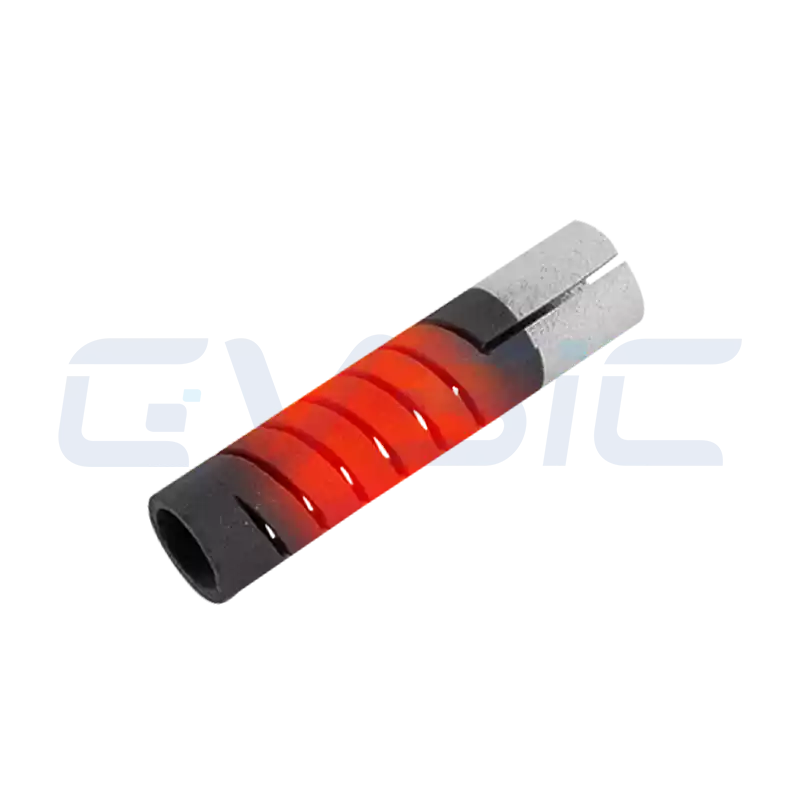
SiC heating elements use the resistive heating properties of silicon carbide for high-temperature applications. Compared to traditional metal heaters, they offer higher operating temps and better corrosion resistance.
Key features:
- Operating temps above 1600°C
- Excellent oxidation resistance
- High thermal conductivity
- Fast heating
- Uniform thermal fields
- Suitable for air and some protective atmospheres
For semiconductors, the standout benefits are excellent cleanliness (zero metal ion contamination) and thermal field uniformity.
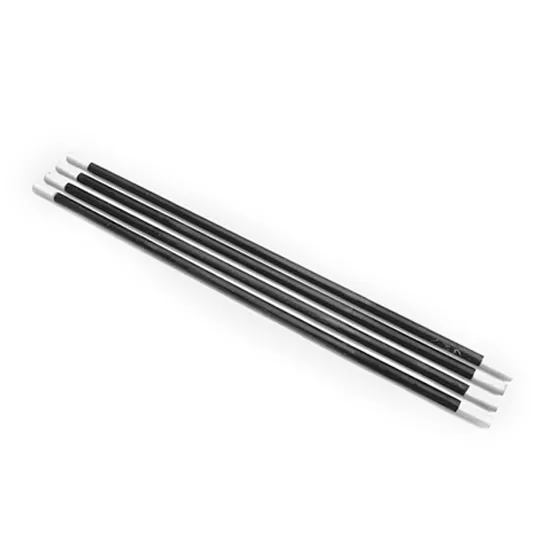
Mainstream semiconductor-grade heating element forms:
- CVD SiC coated graphite heaters: High-purity graphite provides stable internal heating, wrapped with a high-purity CVD SiC coating to lock in particles and prevent carbon black from shedding onto wafers at high temps.
- High-purity silicon carbide rods: Extremely pure SiC straight DC/AC heating rods with precisely controlled resistivity.
Core Advantages of SiC Heating Elements in Semiconductor Manufacturing
More Uniform Thermal Field Distribution
In semiconductor production, temperature uniformity often matters more than peak temperature. SiC’s high thermal conductivity spreads heat quickly and cuts local hot spots. This delivers more even wafer temperatures, stable process windows, higher consistency, and lower defect rates. For diffusion and oxidation furnaces, uniform thermal fields are directly tied to yield.
Faster Thermal Response Speed
SiC quickly builds stable fields. For RTP and RTA, it shortens cycle times, boosts throughput, reduces wafer thermal budget, and improves process window stability.
Lower Contamination Risk
High-purity SiC avoids releasing metal ions like some metals. It also resists powdering and particle generation, making it especially friendly to advanced nodes.
Longer Operating Life
With good design and maintenance, SiC runs reliably for extended periods. For equipment makers and fabs, this means less downtime, lower replacement costs, and higher tool utilization.
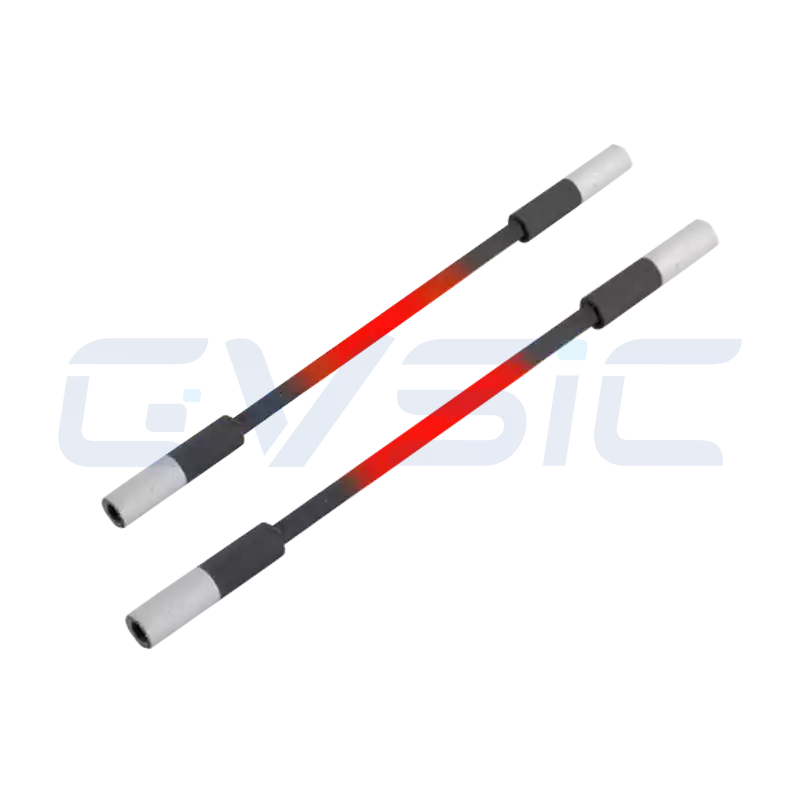


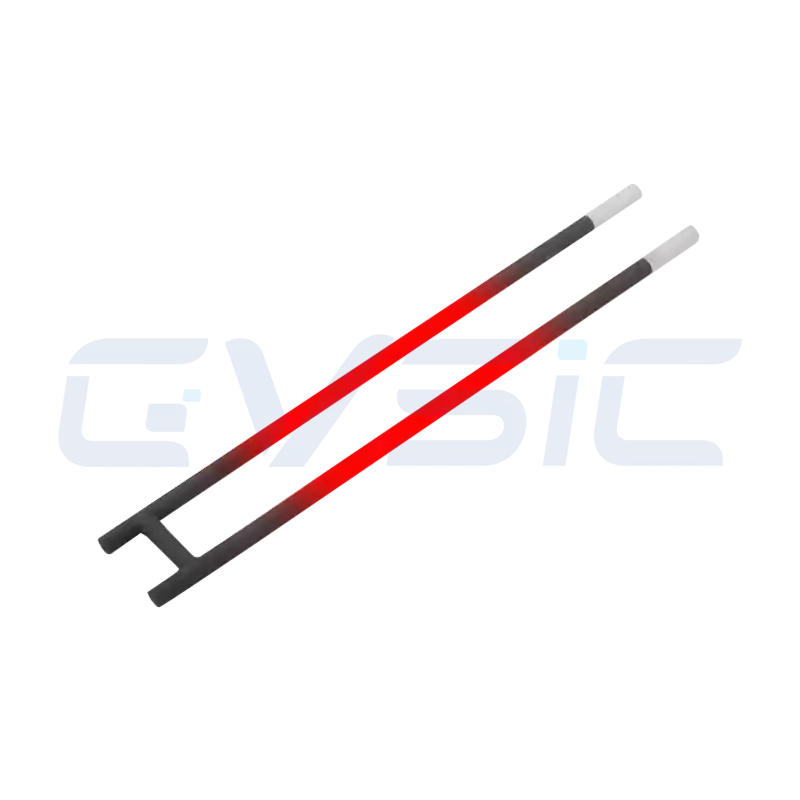

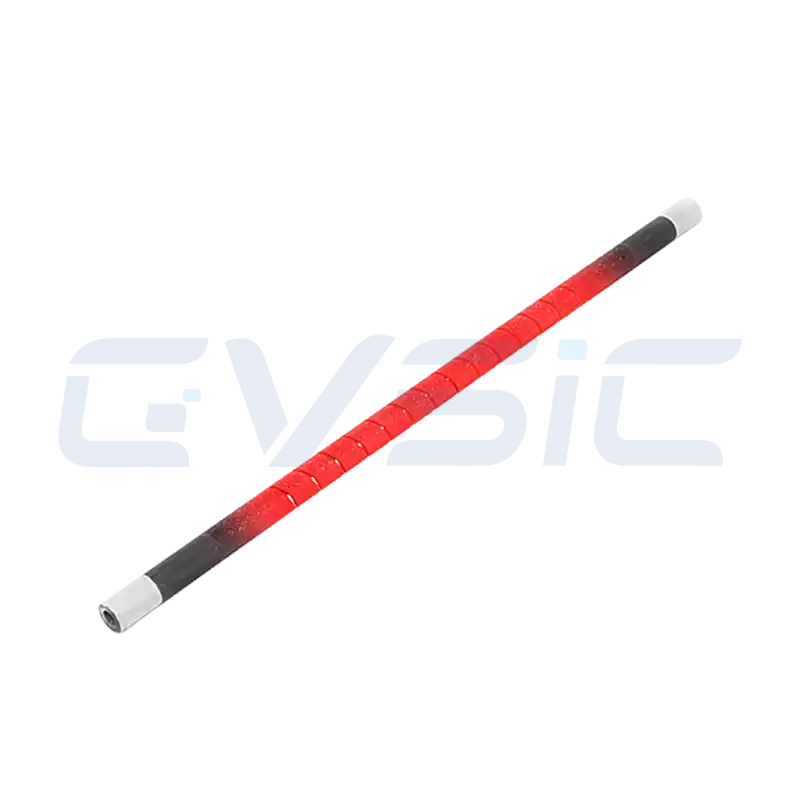

Typical Applications of SiC Heating Elements in the Semiconductor Industry
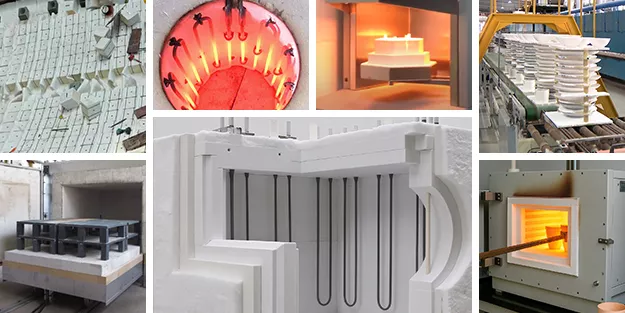
Diffusion Furnace (Diffusion Furnace)
Diffusion introduces specific dopants into silicon wafers at 900–1200°C. SiC provides stable, uniform fields for consistent doping across batches.
Thermal Oxidation Furnace (Oxidation Furnace)
Thermal oxidation forms SiO₂ insulating layers where thickness depends heavily on temperature. SiC improves oxide uniformity, repeatability, and overall consistency.
CVD and ALD Equipment
In thin film deposition, temperature control affects deposition rate, film stress, and layer uniformity. High-purity SiC heaters and coatings are now standard in advanced deposition tools.
Power Semiconductors and SiC Wafer Manufacturing
Rising demand from EVs and energy storage drives SiC power devices. High-temperature equipment uses SiC elements to build stable thermal fields during crystal growth and annealing.
Semiconductor Ceramics and Electronic Material Sintering
Many related materials—like aluminum nitride substrates, alumina substrates, packaging ceramics, and power module insulators—rely on high-temperature sintering. SiC delivers stable, efficient heat sources.
How to Select SiC Heating Elements Suitable for Semiconductor Equipment?
Different tools have different needs. Key selection factors:
Choose by Process Temperature
- Below 1200°C: Most high-purity SiC works fine
- 1200–1400°C: Go with high-purity RSiC or CVD SiC
- Above 1400°C: Consider MoSi2 or specialized high-temp options
Choose by Cleanliness Requirements
Advanced nodes: CVD SiC or high-purity RSiC. Standard industrial tools: SiSiC or standard RSiC.
Choose by Furnace Type
For vertical systems: Multi-zone control (3, 5, or 7 zones) to compensate for top/bottom heat loss and improve uniformity.
Process Atmosphere
Oxidizing, nitrogen, argon, or vacuum conditions affect life—match the element to your gases.
Focus on Long-Term Operating Costs
Upfront price is only part of the picture. Prioritize service life, maintenance cycles, downtime impact, and process stability. High-quality SiC often delivers the lowest total cost of ownership (TCO).
How to Choose Between SiC and MoSi₂ Heating Elements?
Both are common in fabs. Generally:
- Long-term below 1400°C: SiC offers better value
- Above 1500°C: MoSi2 Heating Element
- Ultra-high temps: MoSi₂ provides higher ceilings
- Standard diffusion, oxidation, and heat treatment: SiC meets most needs
Pick based on your exact process, equipment design, and operating costs.
FAQ
Are SiC Heating Elements Suitable for Advanced Process Semiconductor Equipment?
Yes. High-purity CVD SiC and high-purity RSiC are widely used in advanced logic, 3D NAND, and power semiconductor tools.
Will SiC Heating Elements Produce Particle Contamination?
After purification and surface treatment, high-purity semiconductor-grade SiC has extremely low particle release and meets advanced manufacturing standards.
What Factors Affect SiC Heating Element Lifespan?
Main factors include operating temperature, atmosphere, thermal cycles, electrical design, and surface load. Good design and maintenance can greatly extend life.
Conclusion
As advanced logic chips, 3D NAND, power semiconductors, and third-generation semiconductors advance, thermal processing tools face higher demands on heating systems.
With superior thermal field uniformity, high-temperature stability, low contamination, and strong long-term reliability, silicon carbide (SiC) heating elements have become a vital heating solution for diffusion furnaces, oxidation furnaces, CVD/ALD tools, and power semiconductor processing systems.
For equipment makers and wafer fabs, choosing the right SiC elements boosts process stability, yield, and efficiency while cutting maintenance costs.