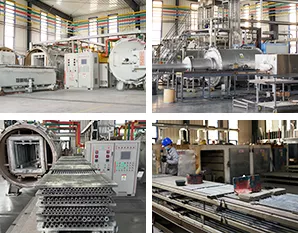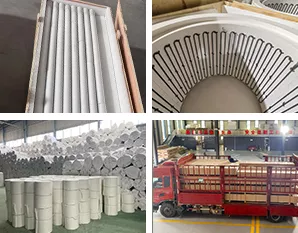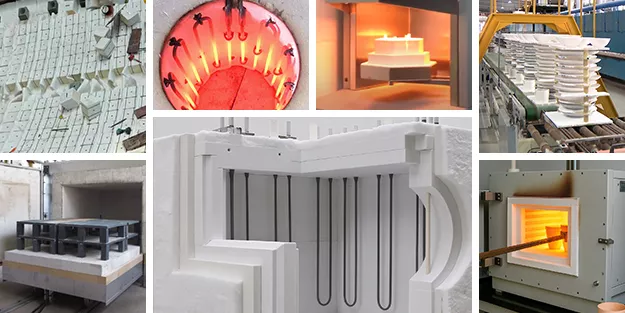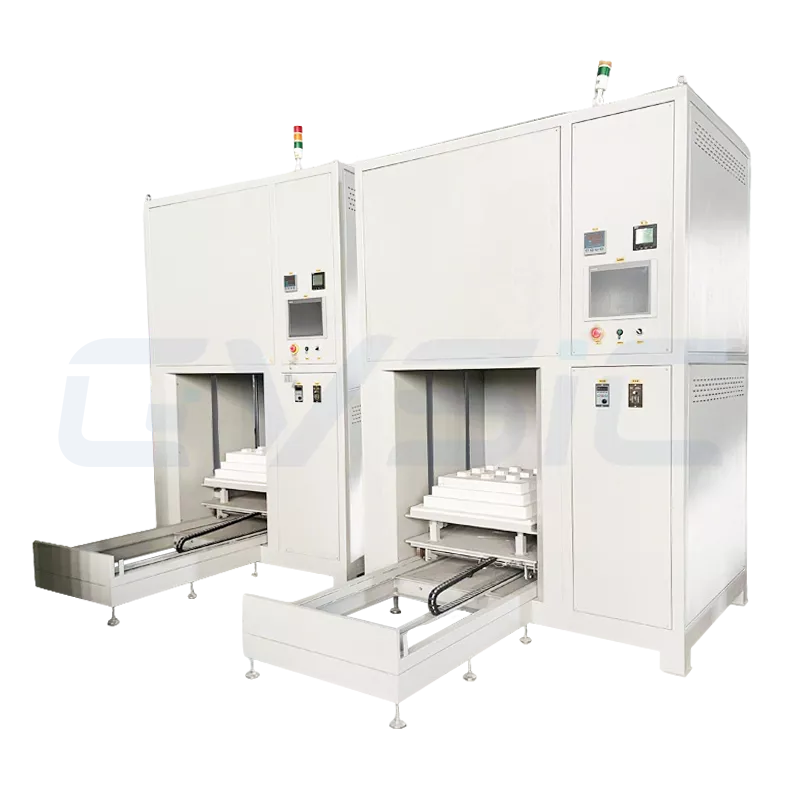

Molybdenum disilicide heating elements, commonly called silicon molybdenum rods in the industry, are among the most widely used heating elements for resistance heating above 1600°C.
Thanks to their excellent high-temperature oxidation resistance, stable resistance properties, fast ramp-up capability, and clean, pollution-free heating environment, MoSi₂ heating elements have become the standard choice for advanced ceramics, electronic ceramics, structural ceramics, refractories, and laboratory high-temperature sintering furnaces.
For sintering processes involving materials like alumina ceramics (Al₂O₃), zirconia ceramics (ZrO₂), silicon nitride ceramics (Si₃N₄), piezoelectric ceramics, ferrites, and MLCC electronic ceramics, MoSi₂ heating elements deliver a stable, uniform, and high-purity thermal environment. This helps materials achieve ideal density, grain structure, and final performance.
CVSIC breaks down the application value of molybdenum disilicide heating elements in the ceramic sintering industry across material characteristics, ceramic sintering needs, furnace design, and life management.
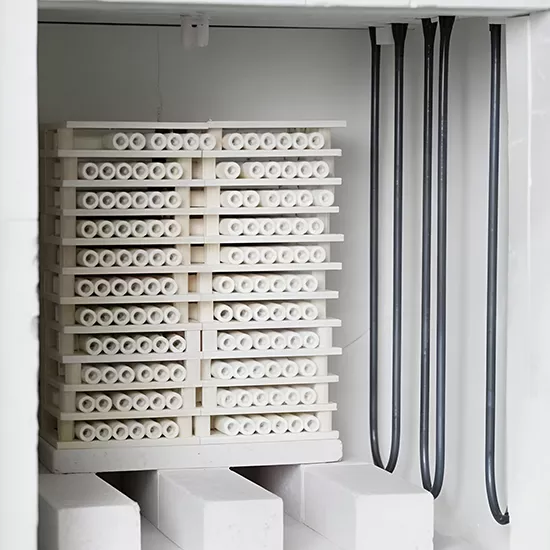
What Are MoSi₂ Heating Elements?
Molybdenum disilicide heating elements are high-temperature resistance heaters made primarily from MoSi₂ using powder metallurgy, extrusion, and high-temperature sintering processes.
MoSi₂ is an intermetallic compound that combines the electrical conductivity of metals with the high-temperature resistance of ceramics, making it ideal for heating environments above 1600°C.
Key features include:
- Maximum furnace temperatures above 1800°C
- Stable performance in high-temperature oxidizing conditions
- Minimal resistance change for precise temperature control
- Fast heating and high thermal efficiency
- Extremely low contamination of ceramic products
- Suitable for long-term continuous operation
For high-purity ceramic sintering, MoSi₂ heating elements are one of the most mature electric heating solutions available.
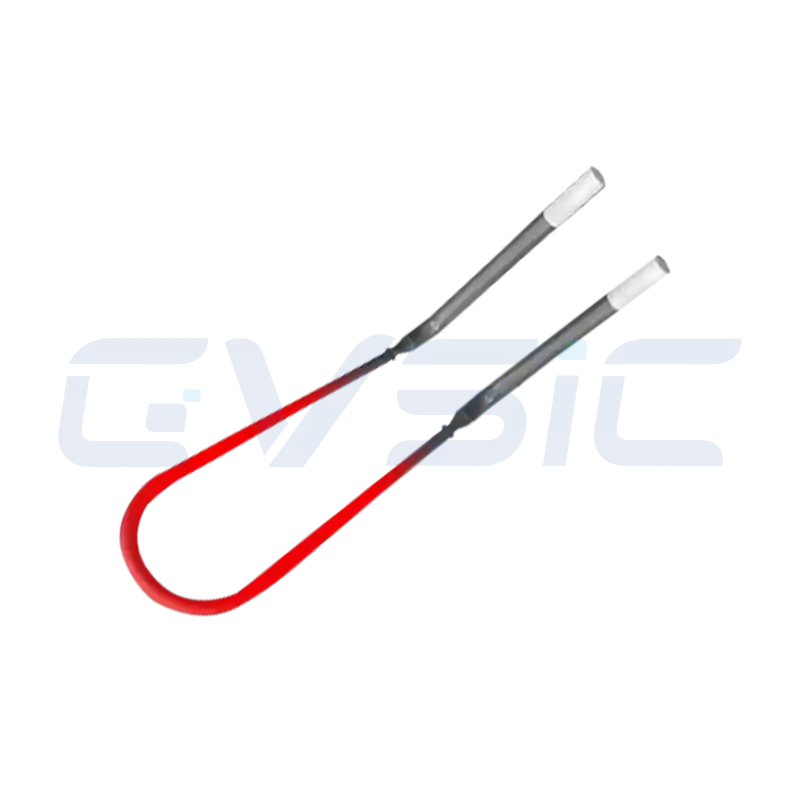
MoSi₂ High-Temperature Oxidation Behavior and Self-Healing Mechanism
MoSi₂ lasts well in oxidizing atmospheres thanks to its selective oxidation:
- Protective film formation: At ≥800 °C under oxygen partial pressure, the surface forms a dense, continuous amorphous SiO₂ glass layer (15–20 μm thick). Reaction: 5MoSi₂ + 7O₂ → 5MoO₃↑ + 2SiO₂ + 2Mo₅Si₃
- Self-healing ability: The SiO₂ film becomes viscous at high temperatures (viscosity drops when T > 1200 °C) and fills microcracks and defects for dynamic repair.
- Pesting issue (low-temperature catastrophic oxidation): In the 400–700 °C range, the SiO₂ film forms too slowly to cover MoO₃ volatilization. This causes heavy MoO₃ whisker growth, swelling, and powdering. Fix: Ramp quickly through this zone during startup (≥10 °C/min) to avoid staying too long.
- Atmosphere limits:
- Oxidizing atmosphere: Best option, continuous use 1400–1800 °C
- Inert gases (Ar, He): Usable but maintain pO₂ ≥ 10⁻⁶ Pa to keep the SiO₂ film
- Nitrogen: Usable up to ≤1500 °C; higher temps cause Si₃N₄ formation and film failure
- Vacuum: ≤1400 °C with low vapor pressure modified grades
- Reducing atmospheres (H₂, CO): Not recommended for standard types; use modified grades with Al₂O₃, MgO, or ZrB₂
Why Ceramic Sintering Needs MoSi₂ Heating Elements?
Ceramic sintering is a complex densification process, not just simple heating.
Particles form sintering necks through diffusion, pores shrink, and grains grow to create a dense, stable microstructure. The process is highly temperature-sensitive.
Insufficient temperature prevents full densification. Too much heat can cause abnormal grain growth, deformation, or cracking.
Ceramic sintering equipment therefore needs to:
Deliver ultra-high temperature performance
Many advanced ceramics sinter above 1500°C.
Examples:
- Alumina ceramics typically at 1550–1750°C
- Zirconia ceramics at 1450–1650°C
- Silicon nitride ceramics at 1650–1800°C
- Aluminum nitride ceramics above 1700°C
Standard nickel-chromium or iron-chromium-aluminum elements can’t handle these temperatures long-term, but MoSi2 elements do it reliably.
Ensure a clean sintering environment
For electronic and functional ceramics, impurities directly hurt performance. Examples:
- MLCC multilayer ceramic capacitors
- Piezoelectric ceramics
- Oxygen sensor ceramics
- Semiconductor ceramic substrates
These are very sensitive to carbon, metal volatiles, and particle contamination. MoSi₂ forms a stable SiO₂ layer in oxidizing atmospheres, greatly reducing contamination risks—ideal for high-purity processes.
Provide uniform and stable temperature fields
Temperature uniformity is critical for sintering quality. A uniform field helps:
- Increase material density
- Control grain size distribution
- Reduce deformation and cracking
- Improve batch consistency and yield
MoSi2 elements heat evenly with stable resistance, enabling precise temperature control.
Core Advantages of MoSi2 Heating Elements
Compared to SiC Heating Elements, MoSi₂ elements offer clear benefits in ceramic sintering.
Excellent oxidation resistance
MoSi₂’s standout feature is its self-protecting mechanism. As temperature rises, a dense SiO₂ protective film forms on the surface. This layer blocks further oxygen penetration and slows oxidation dramatically.
It maintains structural stability and good lifespan even in long-term oxidizing conditions above 1700°C.
Higher operating temperatures
MoSi₂ handles higher temperatures than silicon carbide elements. For sintering processes above 1600°C—like high-purity alumina, zirconia, or aluminum nitride—MoSi₂ is usually the more reliable pick.
Stable resistance for excellent repeatability
SiC elements see resistance gradually increase over time, changing power output. MoSi₂ elements have much smaller resistance shifts, giving you:
- More stable temperature control
- Better process repeatability
- Lower maintenance costs
- Easier mixing of new and old elements
For continuous ceramic production, this means steadier quality and less downtime.
Fast heating for better efficiency
MoSi₂ supports higher surface loads, allowing quicker ramp rates. Fast heating helps companies:
- Shorten sintering cycles
- Boost equipment utilization
- Cut energy use per part
- Improve overall productivity
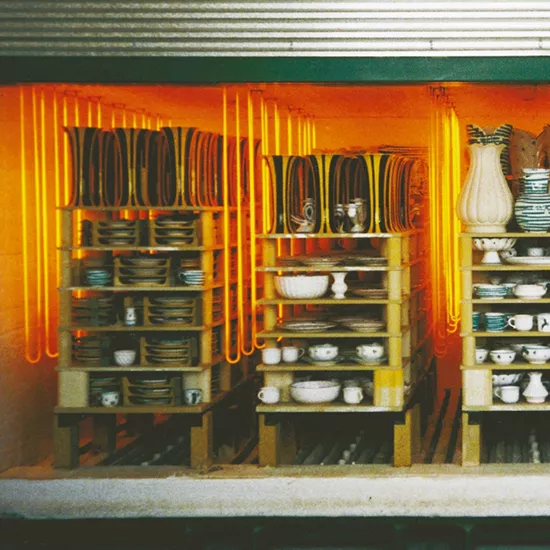
Applications of MoSi₂ Heating Elements in the Ceramic Industry
Alumina Ceramic Sintering Alumina is one of the most common engineering ceramics. It often needs sintering above 1550°C for electronic substrates, wear parts, insulators, and semiconductor components.
MoSi₂ elements provide stable, uniform heat that helps achieve higher density and strength.
Zirconia Ceramic Sintering
Zirconia is used in oxygen sensors, medical ceramics, tools, and new energy applications. It’s sensitive to temperature uniformity, so precise curve control matters. MoSi₂ helps deliver consistent temperature fields and better product consistency.
Electronic Ceramic Sintering
Electronic ceramics demand extreme cleanliness. Examples include:
- MLCC capacitors
- Piezoelectric ceramics
- Ferrite cores
- Electronic packaging ceramics
MoSi₂’s low-contamination and stable control features help protect performance and yield.
Refractory Material Firing
High-grade refractories need high-temperature firing. MoSi₂ elements are widely used for:
- Corundum products
- Mullite products
- Zirconia refractories
- High-temperature insulation materials
Their temperature capability and stability improve quality and shorten cycles.
How to Choose Between MoSi₂ and SiC Heating Elements?
Both MoSi₂ and SiC are common in high-temperature industrial furnaces. Generally:
- Below 1400°C: SiC offers better value
- Above 1500°C: MoSi₂ advantages stand out
- Long-term above 1600°C: MoSi₂ is more reliable
- High cleanliness and uniformity needs: MoSi₂ wins
- Electronic and high-performance structural ceramics: MoSi₂ is often the top choice
Selection should consider not just upfront cost but also lifespan, product quality, and maintenance.
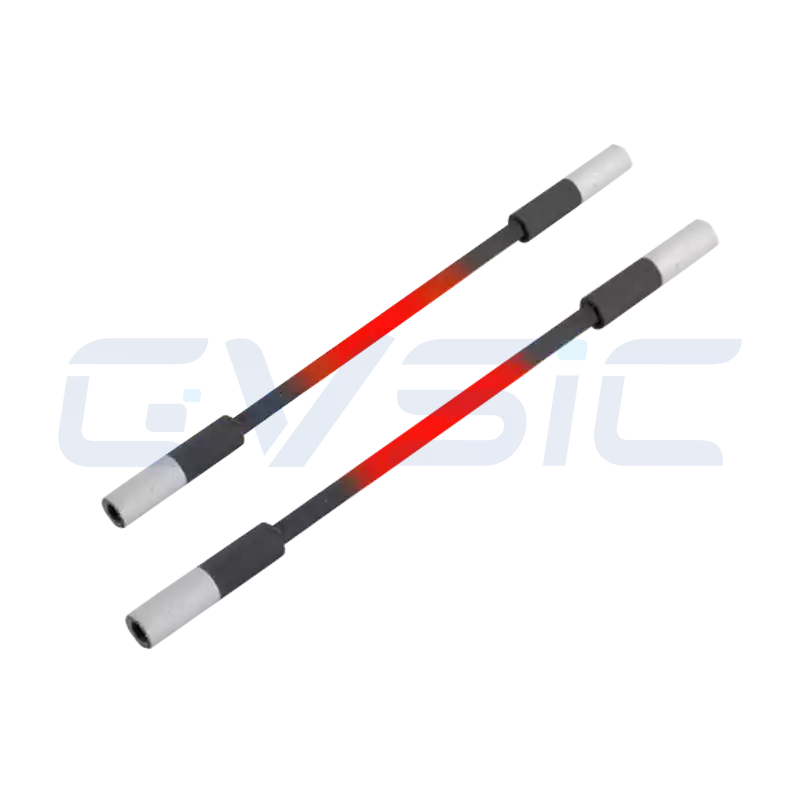
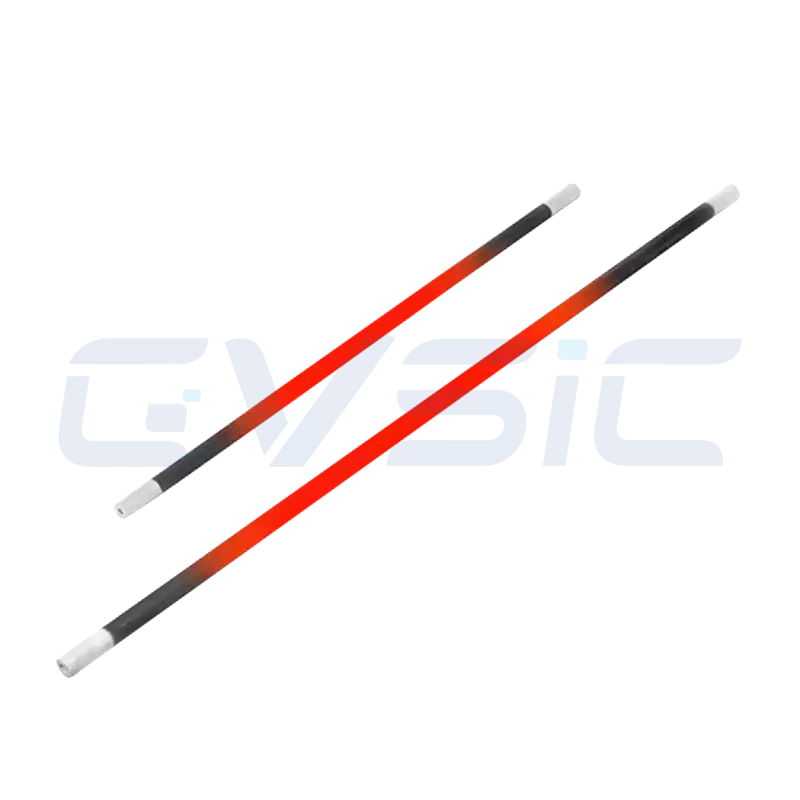
Quantitative Comparison of MoSi₂ with Alternatives
| Comparison Dimension | MoSi₂ Elements | SiC Elements | Graphite Elements | Resistance Wire (FeCrAl) |
|---|---|---|---|---|
| Max Working Temp (Air) | 1850 °C | 1600 °C | 400 °C (oxidation loss) | 1400 °C |
| Max Working Temp (Inert) | 1850 °C | 1650 °C | 2800 °C | 1400 °C |
| Atmosphere Cleanliness | ★★★★★ | ★★★☆☆ | ★★☆☆☆ | ★★★★☆ |
| Resistance Aging Drift | Almost none | Significant (end of life +50%–100%) | None (U-type graphite needs periodic gap shortening) | Slight |
| Thermal Shock Resistance | ★★★★☆ | ★★★☆☆ | ★★★★★ | ★★★★☆ |
| Life (1700 °C Air) | 3000–8000 h | 500–1500 h | N/A | N/A |
| Price (Relative Factor) | 1.0 | 0.3–0.5 | 0.1–0.2 | 0.05–0.1 |
| Unit Life Cost | Low | Medium–High (frequent replacement) | Medium | High (temperature limited) |
Furnace Design and Element Selection Recommendations
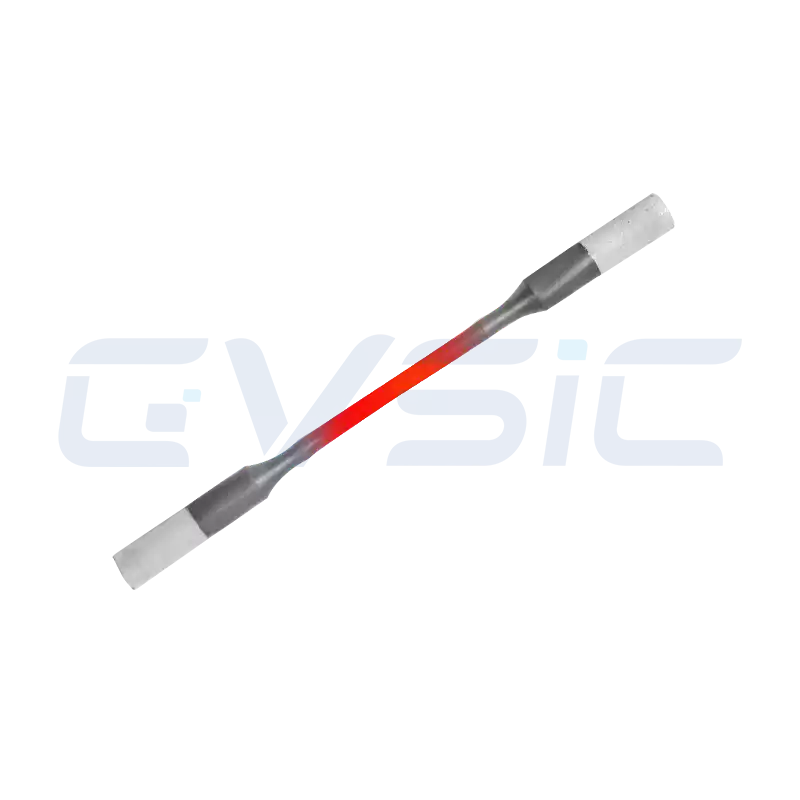
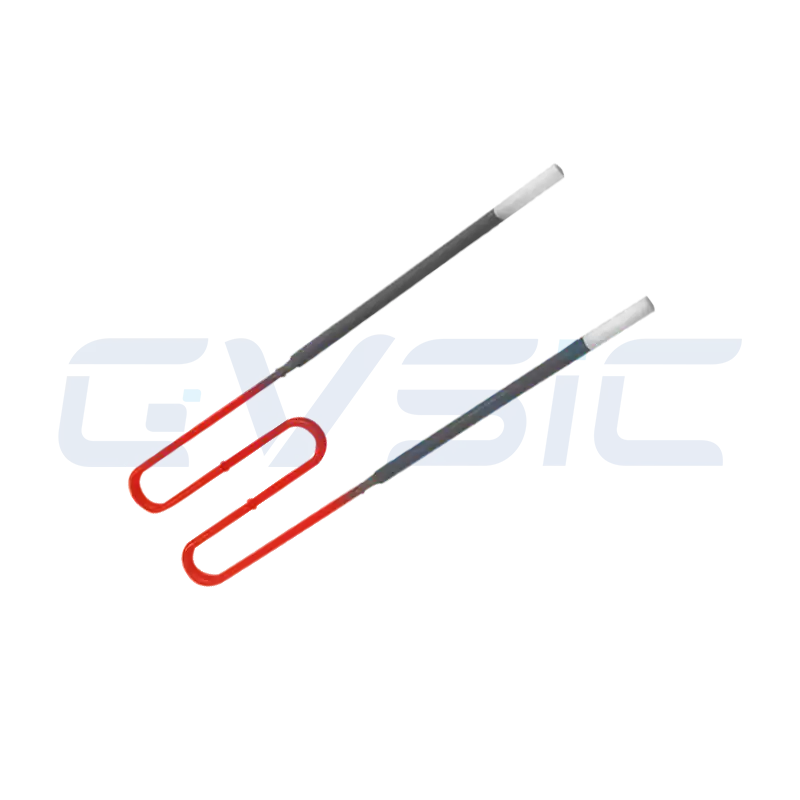
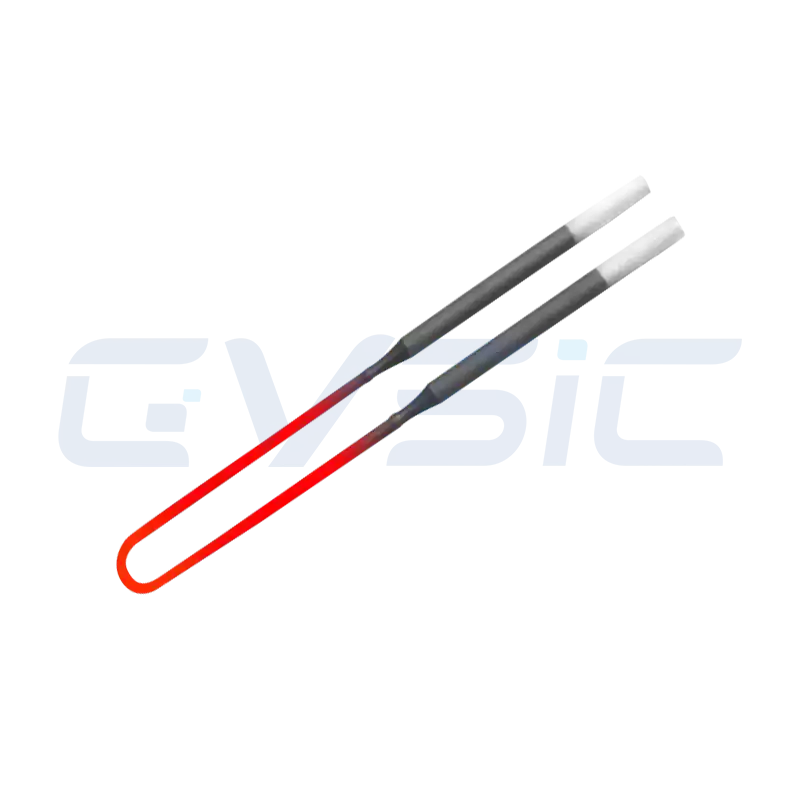
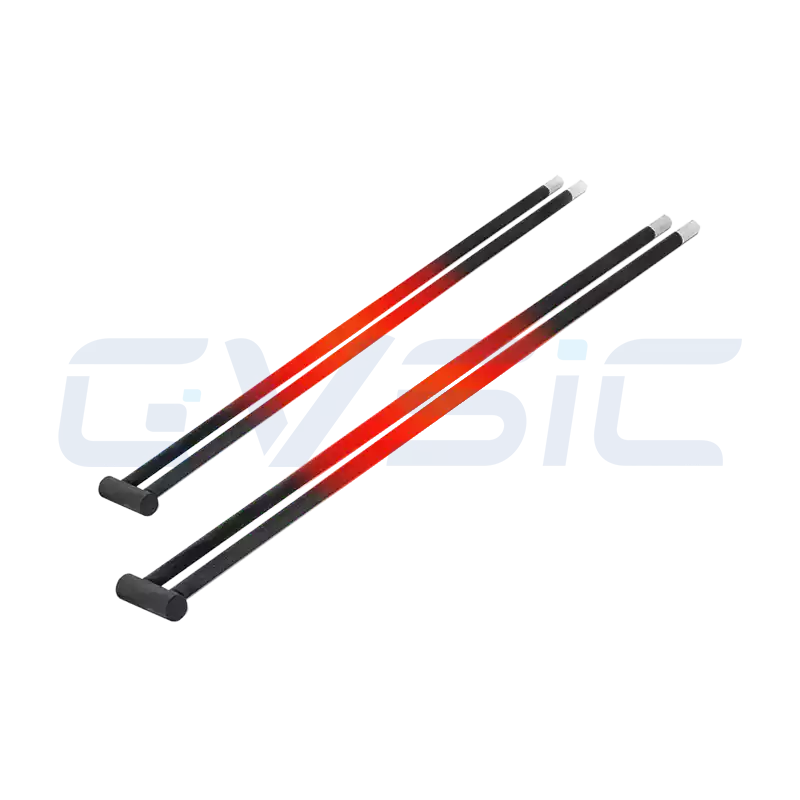
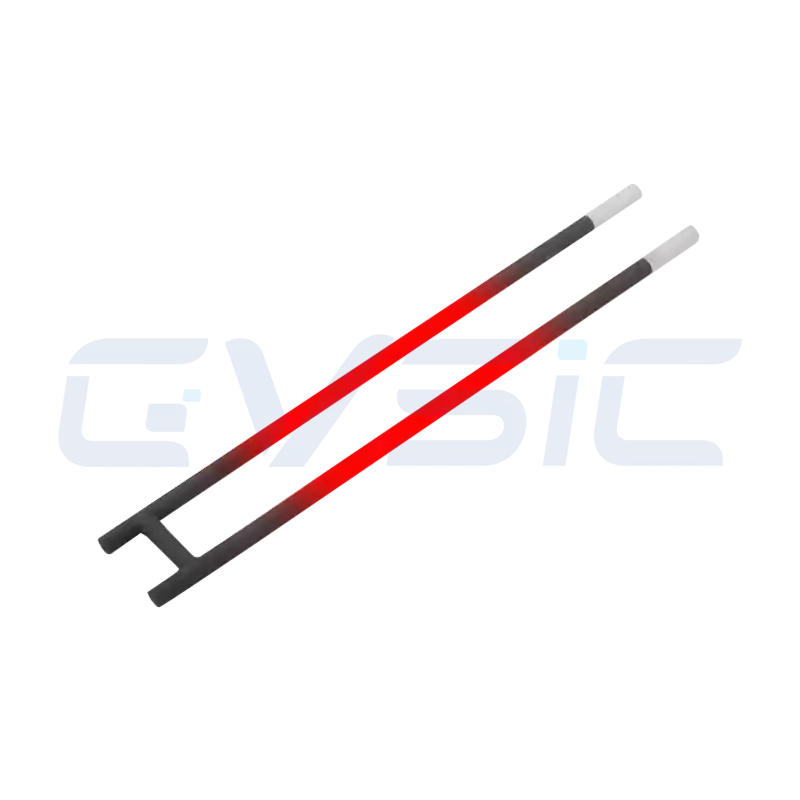
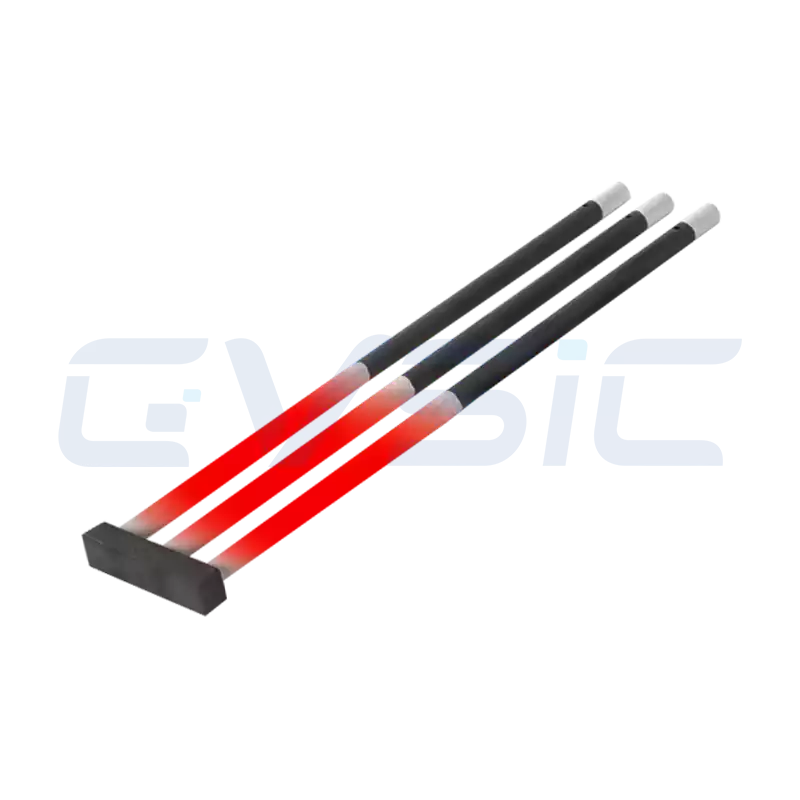
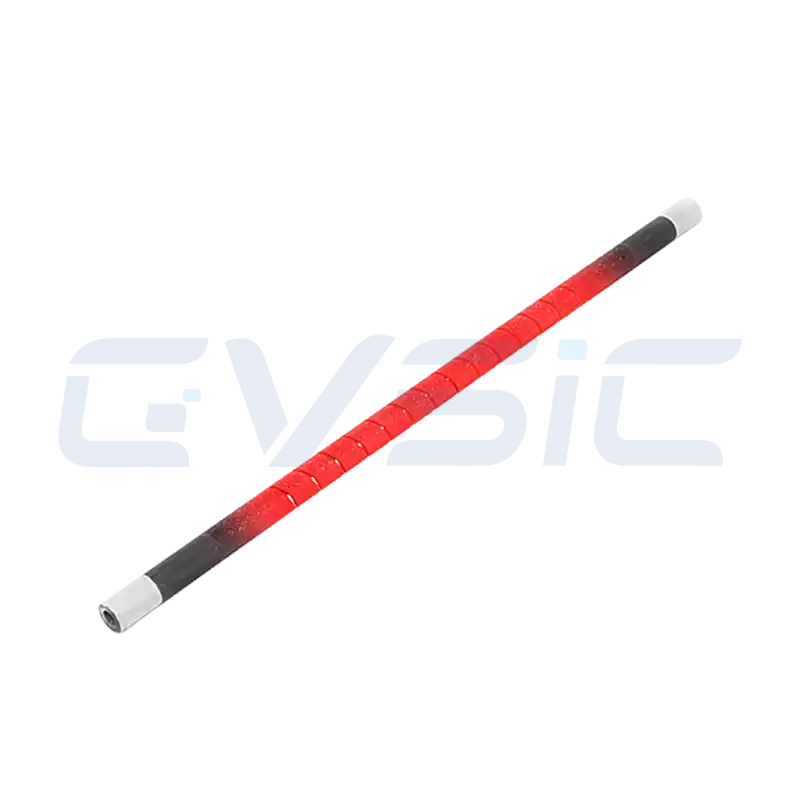
For best results, match MoSi₂ elements to your furnace structure. Common types in industrial use:
- U-type: Great for box and tube furnaces
- W-type: Ideal for large industrial kilns
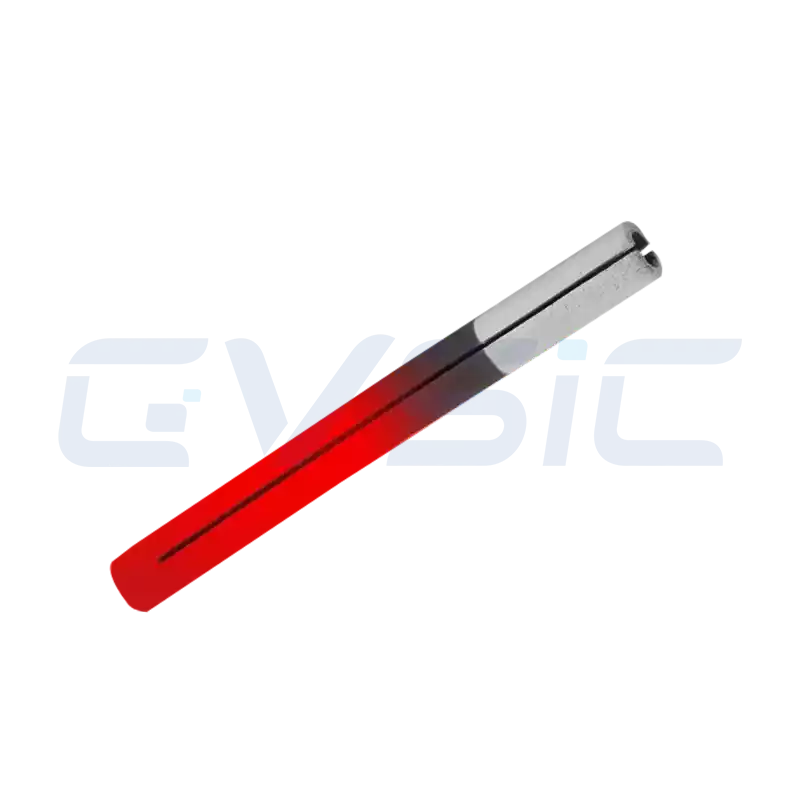
- Straight rod: Suited for special chamber shapes
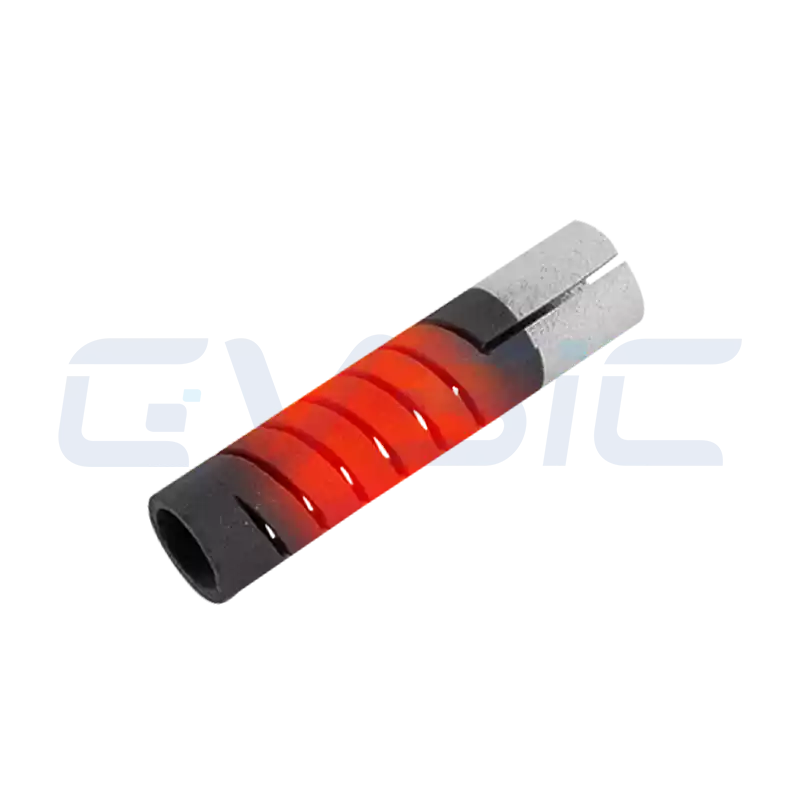
- Spiral: Perfect for small lab furnaces and fast-heating setups
Focus on:
- Maximum operating temperature
- Chamber size
- Loading capacity
- Uniformity requirements
- Atmosphere conditions
- Expected lifespan
Smart layout and surface load design often matter more than just upsizing elements.
Installation, Maintenance, and Life
Management Installation Best Practices
- Suspension: Vertical (preferred) or horizontal support; let hot end expand freely with flexible cold-end seals
- Cold-hot transition: Keep weld zone inside insulation to avoid high chamber temps
- Expansion allowance: ~14 mm per meter length at 1800 °C (7.8×10⁻⁶ × 1800 × 1000); leave room to move
- Electrical connections: Use aluminum braid or copper busbars on cold ends (contact resistance <0.5 mΩ); check fasteners for oxidation regularly
Operation Checks
- SiO₂ film: Visually inspect after cooldown—normal is uniform yellow-brown glassy shine; black or white spots signal problems
- Resistance monitoring: Measure cold-state resistance regularly at consistent temperatures (e.g., 200 °C); deviations >10% need investigation
- Thermocouple calibration: Check Type B accuracy every 500 hours—high-temp drift is common
End-of-Life Signs
| Criterion | Threshold | Explanation |
|---|---|---|
| Resistance Change | Deviation from initial >15%–20% | Local oxidation or grain coarsening |
| SiO₂ Film | Large-area spalling or spheroidization | Protective layer failure, faster oxidation |
| Mechanical Damage | Diameter reduction >20% | Uneven section causing hot spots |
| Hot-End Bending | Deformation >5° | Creep buildup; risk of shorting against wall |
Recycling Scrapped Elements
- Waste MoSi₂ contains ~63 wt% Mo and ~35 wt% Si
- Recover molybdenum (>90% rate) via oxidation roasting-alkali leaching-ion exchange for ammonium molybdate or new coating materials
- Some suppliers offer trade-in recycling programs
Summary
As advanced ceramics, electronic ceramics, and high-performance refractories grow rapidly, high-temperature sintering demands more from heating systems.
Molybdenum disilicide (MoSi₂) heating elements combine ultra-high temperature capability, outstanding oxidation resistance, stable resistance, and clean heating—making them a key part of modern ceramic sintering equipment.
For ceramic manufacturers running long-term above 1600°C and aiming for high consistency and efficiency, choosing MoSi₂ elements the right way improves quality, cuts maintenance costs, and boosts overall profitability.